
This guide covers the basic tools and steps for brewing tea with a traditional Chinese tea set. It focuses on practical procedures you can follow immediately about the gongfu tea set and chinese tea set.
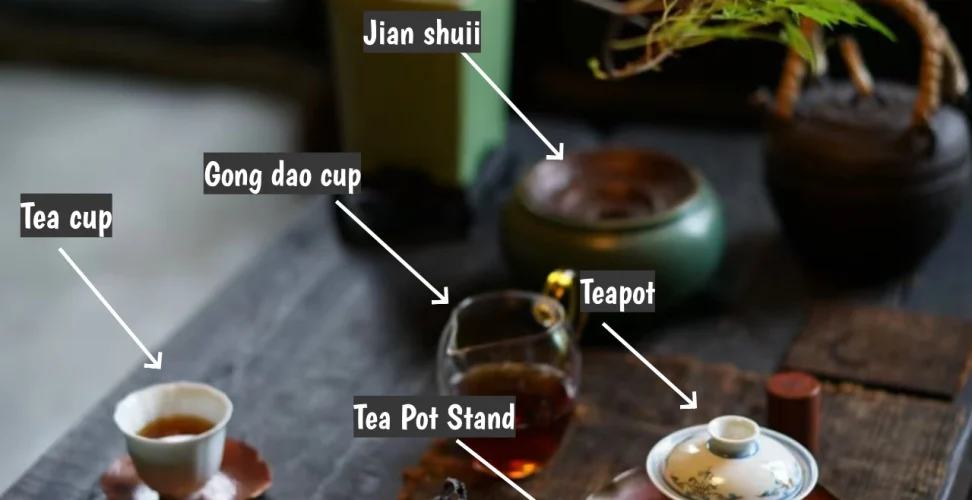
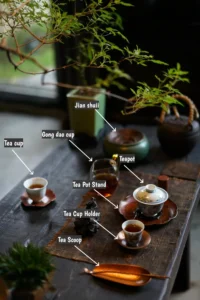
Before you start brewing, get to know the tools on your tea tray. Each piece has a specific function.
Brewing vessel – either a teapot or a *gaiwan* (covered bowl). This is where the tea leaves meet the hot water. The brewing vessel has the greatest influence on the final flavor of your tea. A gaiwan has the added advantage of letting you watch the leaves unfurl as they steep.
– Fairness cup (gongdao bei) – a pitcher used to hold the brewed tea before serving. Pour all the tea from the brewing vessel into this cup, then distribute it evenly among the drinking cups. This ensures every cup has the same strength and color.
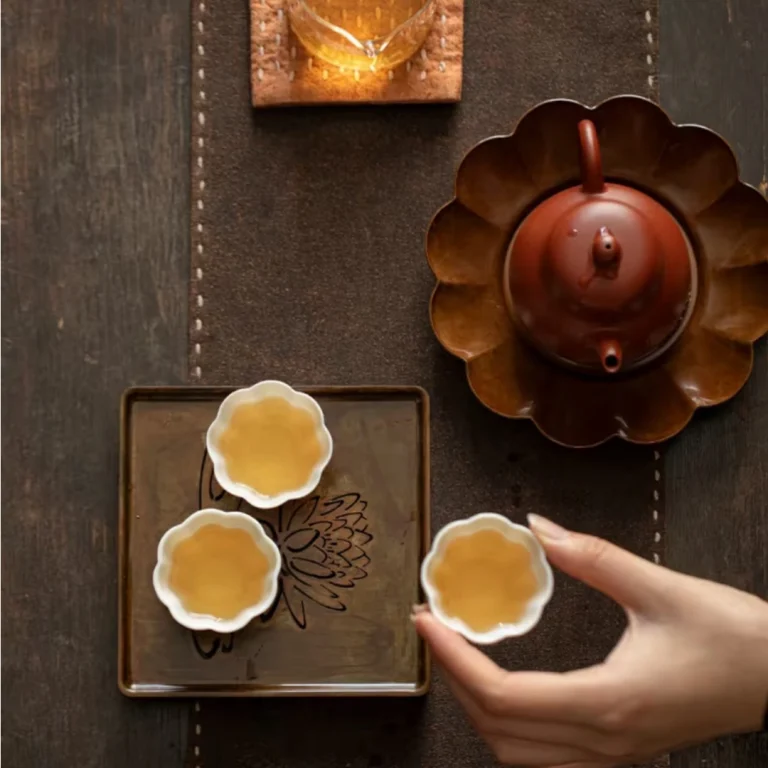
– Drinking cup (pinming bei) – a small cup designed for tasting the tea. Its small size lets you drink the tea while it’s still at the optimal temperature, and the narrow opening helps concentrate the aroma.
– Tea boat / holder (hu cheng) – a small dish placed under the teapot or gaiwan. It catches any hot water that spills during warming or rinsing, keeping your tea table clean and dry.
– Waste water bowl(jian shui) – a container for collecting used water. During the process, you will have waste water from warming cups, rinsing tea, and pouring off the first steep. All of this goes into the waste water bowl. Using this bowl keeps your workspace tidy and prevents smells from stale water.
– Cup holder (bei tuo) – a small saucer under each drinking cup. It makes serving easier (you can hand the cup without touching the hot ceramic) and protects your table from heat marks.
Boil a kettle of hot water. Pour hot water over the teapot (or gaiwan), the fairness cup, and each drinking cup. This does two things: it cleans the tools, and more importantly, it **preheats them**. Warm vessels help release the tea’s aroma when the hot water hits the leaves.
Pour the rinse water into the **waste water bowl**.
Use a tea scoop or chopsticks to place the desired amount of tea leaves into the warmed teapot or gaiwan.
Pour in a small amount of hot water – just enough to cover the leaves – then immediately pour it out. This step is called “waking the tea” or “rinsing.” It allows the leaves to begin unfolding and releases their initial aroma.
This rinse water is **not for drinking**. Pour it directly into the **waste water bowl**.
Refill the pot with hot water all the way to the top. Close the lid.
Wait for the appropriate steeping time. As a general starting point:
– First steep: **about 1–2 minutes
– Each subsequent steep: add 30 seconds to 1 minute (adjust according to taste)
When the time is up, **pour all the tea** out into the fairness cup. Make sure you pour every last drop. If you leave the tea leaves sitting in water, they will continue to steep and become bitter.
Note: If you choose to pour hot water over the outside of the teapot to keep it warm (called “rinsing the pot”), that water also goes into the waste water bowl.
Pour the tea from the fairness cup into each drinking cup. Distribute it evenly, going back and forth between cups so each person gets the same strength.
Place each drinking cup on a **cup holder** before handing it to someone. This makes serving easier and more stable.
Fill each cup to about **70% full** – not all the way. This leaves room to appreciate the aroma and prevents spills when handling.
Different teas require different temperatures. A more detailed guide with recommended brewing temperatures and times for various tea types will be compiled later; this section provides only basic references for now.
– Oolong tea and Pu’er: **100°C (boiling water)**
– Green tea and white tea: **80–85°C** (let boiling water cool for a minute or two before pouring)
Good tea leaves can be brewed 5–6 times or more. Each steep will taste slightly different. This is one of the pleasures of gongfu tea – you get to experience how the flavor evolves.
– When adding water to the pot, you can **pour from a higher position** (raising the kettle) – this agitates the leaves and helps release aroma.
– When pouring tea out, keep the spout **close to the fairness cup** – this reduces foam and splash.
– For a stronger brew: steep longer.
– For a lighter brew: steep shorter.
– The timings given above are starting points. Experiment and find what suits you.
This guide covers three areas: knowing your tools, following the basic brewing steps, and adjusting your technique for better results. With practice, the process will become natural. Start with the steps outlined here, and adjust based on your tea type and personal preference.
For more on Chinese tea sets in hammered copper and carved tin, please visit the link below:
👉 [Hammered Copper & Tin Tea Ware Collection]