Subtitle: A Unique Chinese Art Form · Heirloom-Quality Hand-Engraved Oriental Porcelain Artworks for Fine Home Decor
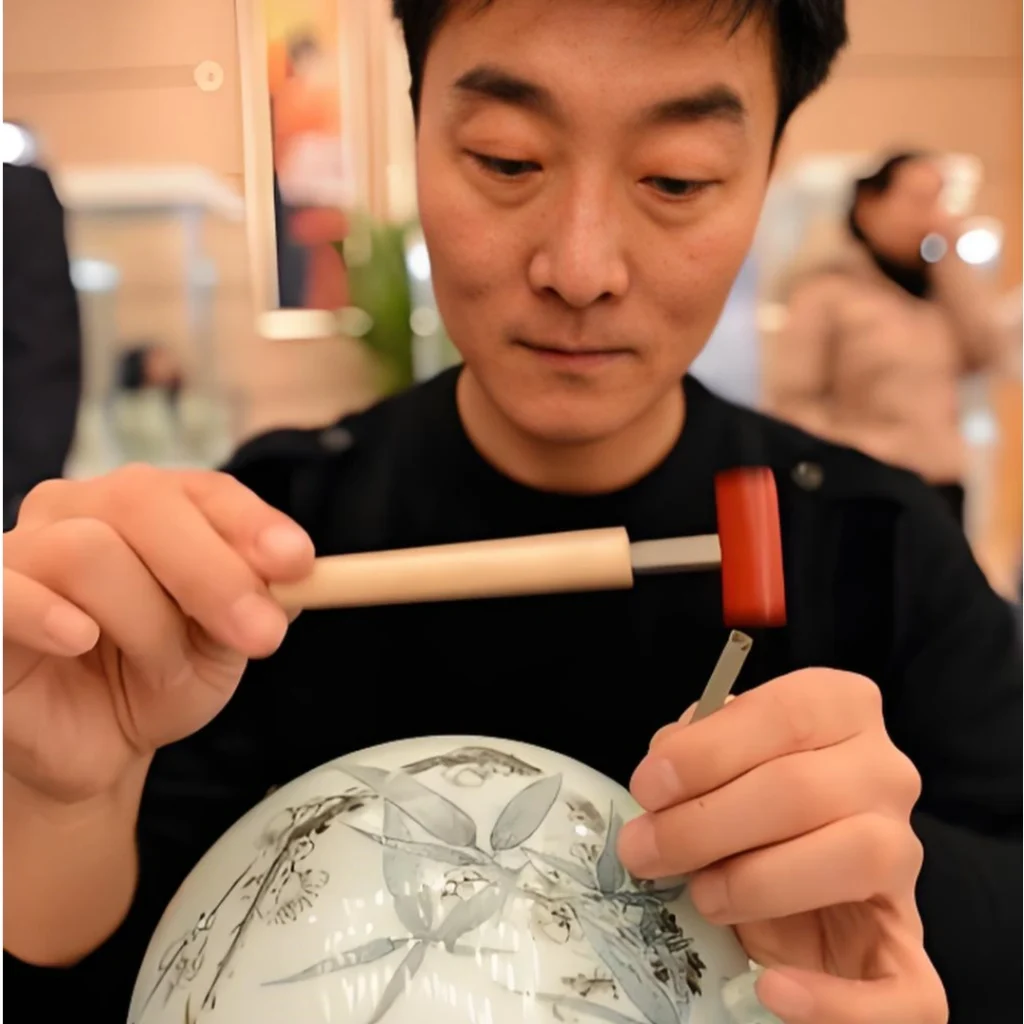
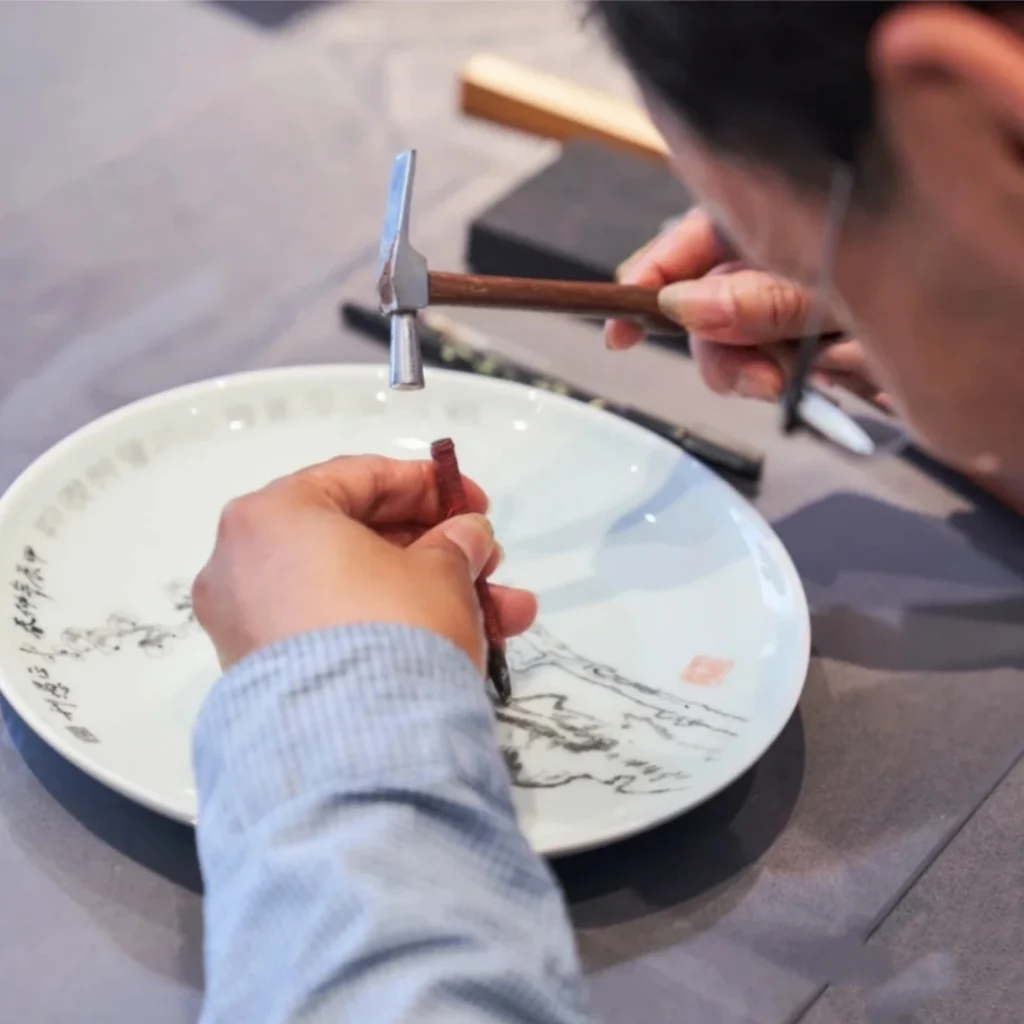
Hand-engraved porcelain is a unique traditional Chinese craft, often called "embroidery on porcelain." It blends four art forms: painting, calligraphy, seal carving, and sculpture. Using a specially crafted diamond-tipped tool as a brush, the artisan carves intricate imagery onto the hard, fragile surface of porcelain.
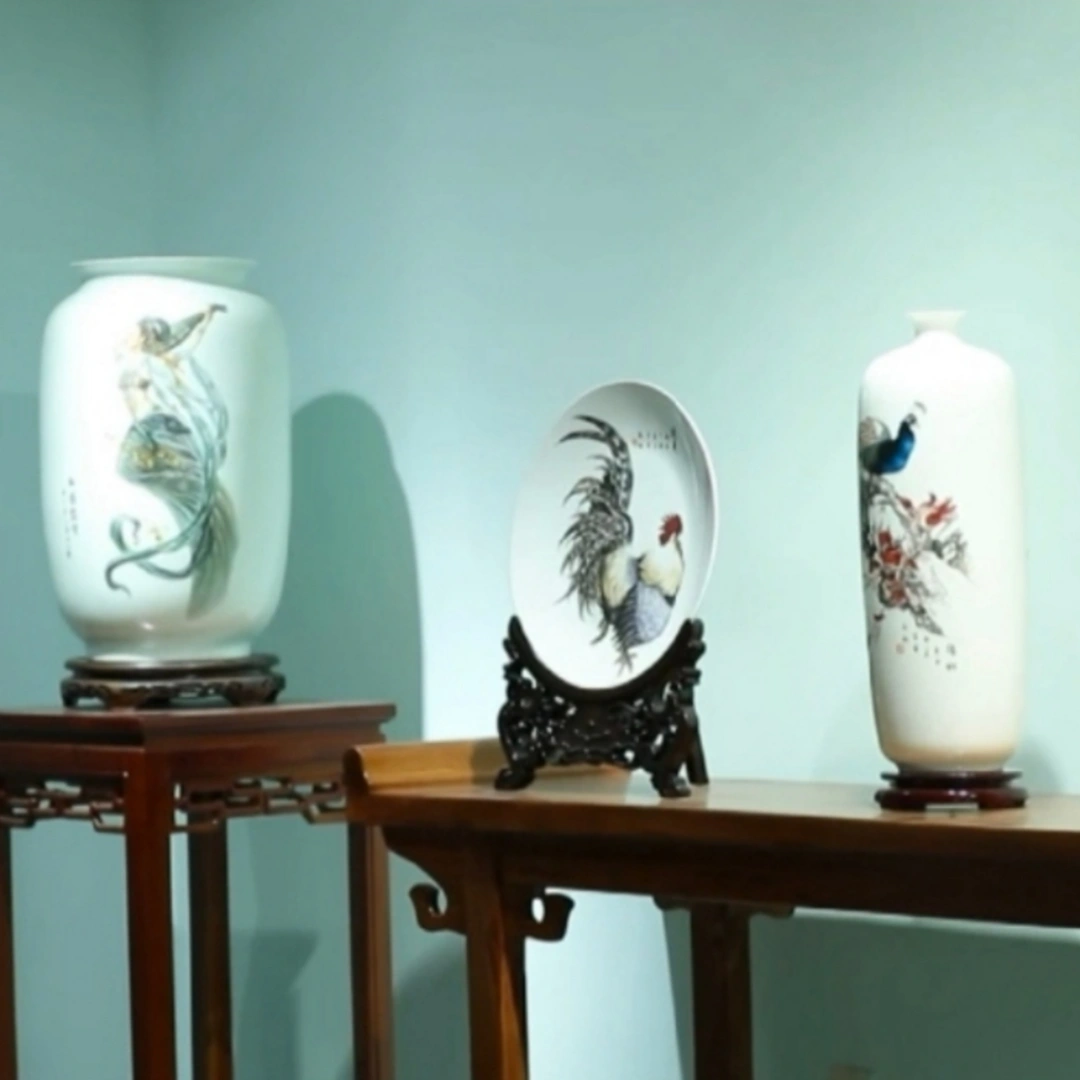
From imperial court treasures to everyday Chinese decorations home, engraved porcelain works have always been a crowning touch in Oriental interior spaces — whether as chinese scroll painting wall art, porcelain vase centerpieces, or celadon plates for display.
This is an art of "no eraser." Every stroke of the knife is final — there is no turning back.
1. Stippling (Dot Carving):
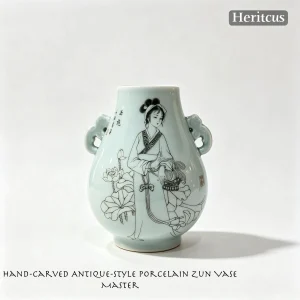
The knife tip strikes the porcelain surface vertically, building the image through the density and depth of countless dots. Dense areas appear heavy and substantial; sparse areas feel airy and light. Thousands upon thousands of dots come together — from a distance, it is a painting; up close, it is a field of individual marks. This technique excels at rendering the delicate textures of figures, flowers, and bird feathers.
A fine piece of ceramics chinese porcelain often requires hundreds of thousands of stippling strikes to complete.
2. Line Carving:
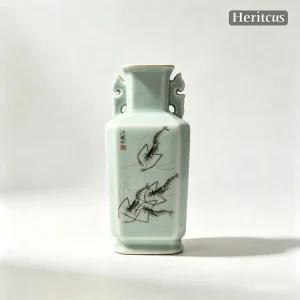
The knife tip glides steadily across the porcelain surface, creating continuous, flowing lines. Each line must be smooth, bold, and uninterrupted — once broken, the line cannot be repaired. This technique is ideal for capturing the rhythm of calligraphy and the graceful contours of vessels.
Whether it is the ink spirit of a scroll painting chinese or the interlocking vines on a blue and white porcelain vase, line carving conveys the essence with precision.
3. Surface Carving:
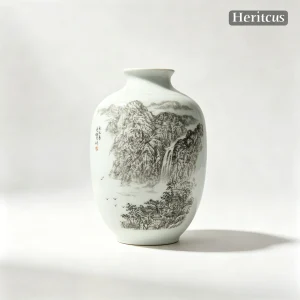
Across a larger area, dots or lines are arranged densely in layers to build blocks of light and shadow. Through variations in the weight and rhythm of hammer strikes, the artisan sculpts subtle gradations of light and dark — much like cross-hatching in a pencil sketch. This technique shines in portraying the grandeur of landscapes and the delicate nuances of light.
A chinese porcelain vase depicting a misty mountain scene is a perfect showcase of surface carving mastery.
4. Pigment Inlay (Coloring):
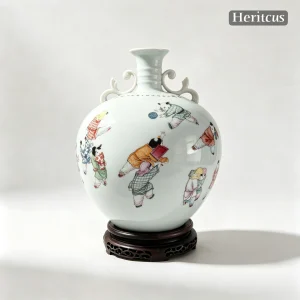
After the carving is complete, mineral pigments are applied into the engraved grooves, then wiped clean to reveal the finished image. The pigments penetrate deep into the grooves and will never fade or wear away — in fact, the more the piece is polished, the brighter and more vivid the image becomes.
Whether on celadon plates with their jade-like green or on a porcelain flower vase adorned with birds and blossoms, the colors endure through the ages.
Porcelain is hard yet fragile. The greatest challenge of this craft is this: once the knife strikes, it cannot be undone.
Unlike painting on paper, engraved porcelain has no "eraser." A cut that is too deep or slightly off can ruin the entire piece. The artisan must achieve perfect unity of mind and hand — every move is pre-visualized before the knife ever touches the surface.
A complex piece of chinese porcelain plates or porcelain vase work often requires tens of thousands, even hundreds of thousands, of hammer strikes. A single mistake can render the entire piece worthless.
That is precisely why every engraved porcelain work is one of a kind.
Engraved porcelain originated in the Qing imperial court. According to research by veteran engraving artists Zhang Mingwen and Zhang Daohong of Zibo Ceramics Factory, Emperor Kangxi enjoyed inscribing his personal marks on his favorite porcelain pieces — and court artisans began carving these imperial inscriptions into the porcelain surface. This is believed to be the beginning of the craft. Another account attributes its origins to the Qianlong era. The earliest surviving engraved porcelain works, created in 1776 (the 41st year of Qianlong's reign), are now housed in the Beijing Palace Museum and the Taipei Palace Museum.
In the late Guangxu period, the imperial court established a dedicated engraving workshop, and the craft began to spread beyond the palace walls.
After the founding of the People's Republic of China, the craft experienced a revival in Qingdao. Artists Shi Ke and Zheng Huimin conducted systematic research on engraving techniques at the Qingdao Institute of Arts and Crafts, breathing new life into the nearly lost art.
In 1975, the Zibo Ceramics Factory sent Zhang Mingwen and Liu Ruiyun to Qingdao specifically to study engraving techniques under Shi Ke, Zheng Huimin, and other Qingdao masters. They brought the skills back to Zibo, where the craft flourished rapidly. In 1980, Zibo engraved porcelain won the Gold Medal at the 34th Munich World Handicrafts International Exposition — the first international gold medal awarded to Chinese engraved porcelain since the founding of the PRC.
Since then, Zibo engraved porcelain has been presented as state gifts to dozens of countries and regions, producing 9 national-level master artists and 27 provincial-level master artists. The People's Daily proclaimed: "The world's engraved porcelain is in China; China's engraved porcelain looks to Zibo."
In 2013, Zibo engraved porcelain was inscribed on the Shandong Provincial Intangible Cultural Heritage representative list.
Having traveled from imperial halls through centuries of heritage, engraved porcelain today can serve as everyday tea sets and tableware, as scholar's desk ornaments, or as heirloom collectibles passed down through generations.
A fine engraved porcelain piece stands the test of time — the engraved marks never wear down, and the colors never fade. Whether displayed as a chinese lucky charm for blessings and good fortune, arranged as feng shui home decor to harmonize a living space, or simply placed as zen home decor to add a touch of meditative calm to a modern interior, engraved porcelain always brings the quiet elegance of the East into your home
Hand-engraved porcelain in standard classic styles — ready for you to own.
Product Types :Hand-Engraved Oriental Porcelain Artworks for home decor (porcelain vase, celadon plates,)
Delivery Timeline :60 days after order confirmation
Pricing:Fixed pricing — transparent and clear
Customization:Choose from existing patterns and standard sizes
CTA【Shop Now】→ Link to luqing Celadon green vase
Tailor-made to your exact dimensions, design, and functional requirements — one-on-one in-depth consultation.
Product Types:Premium hand-engraved porcelain customization (any vessel form, any subject matter)
Delivery Time:Depends on technical solution complexity
Pricing:Inquiry-based — customized quotation
Customization:Fully bespoke — no limits
CTA【Inquire Now】→ Link to contact page
Have questions about our hand-engraved porcelain artworks? We're here to help.
Email: sales@heritcus.com
WeChat: +86 13792820546
WhatsApp: +86 13792820546