1: What is rice paper art of Puhui New Year Painting?
Puhui New Year Painting is a unique Chinese folk art painting form that exists only in Gaomi, Weifang, Shandong — making it the sole New Year painting genre of its kind in China and the world. It is renowned as “a unique treasure of China” and hailed as the “living fossil” of Chinese New Year painting history. In 2006, Gaomi Puhui New Year Painting was inscribed on the first batch of China’s National Intangible Cultural Heritage list.
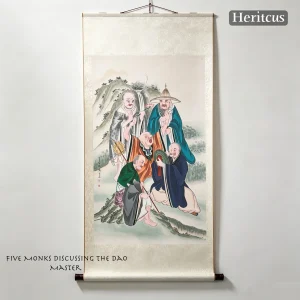
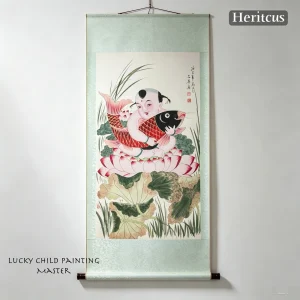
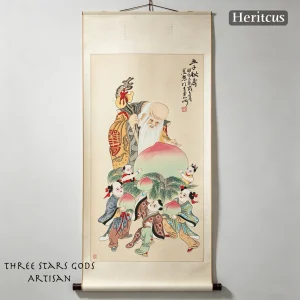
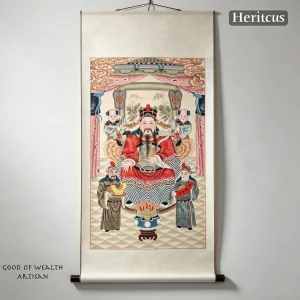
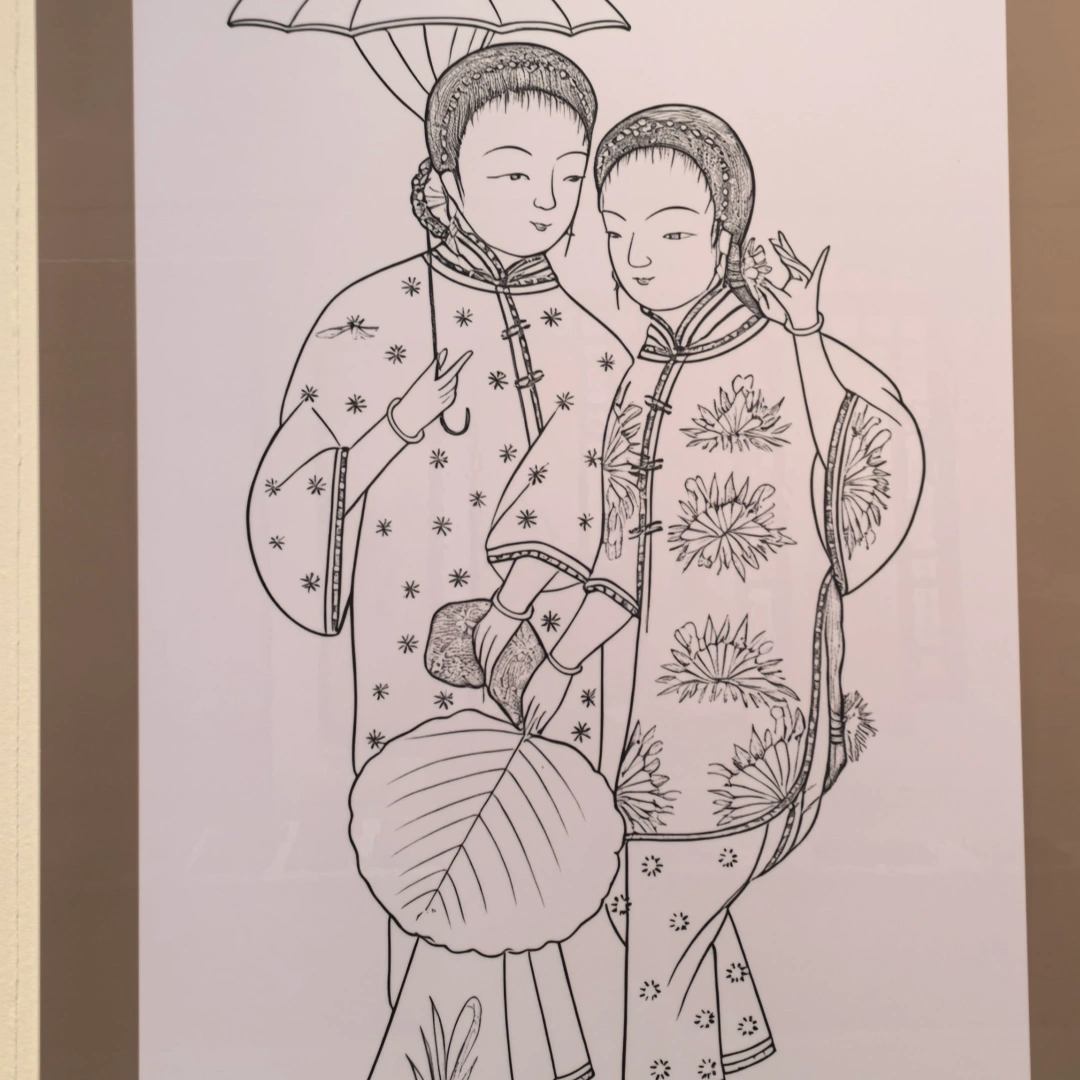
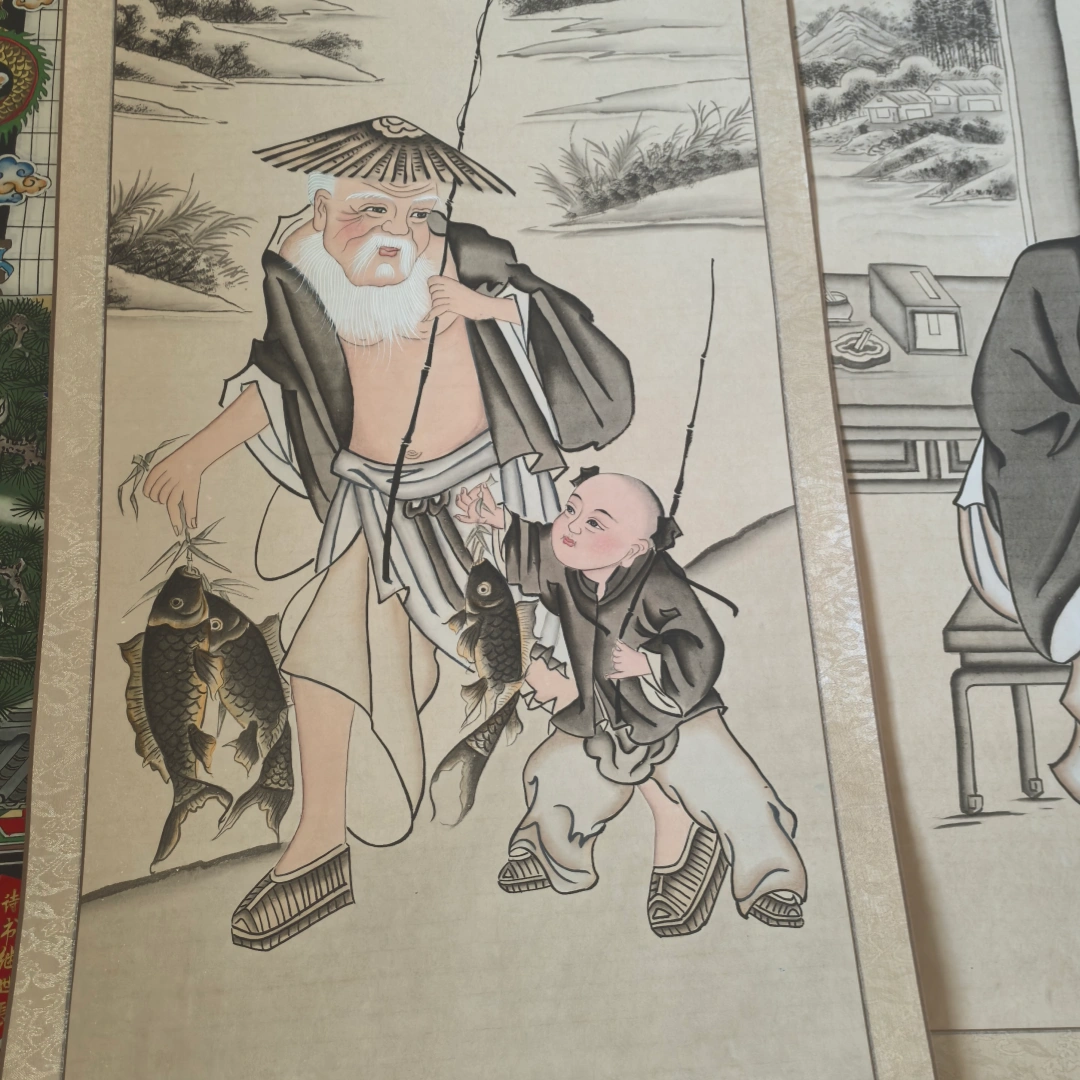
The style of Puhui New Year Painting is a folk art painting of rustic yet spirited, vibrant yet refined beauty. Bold reds and greens collide in striking contrast, with flowing, unrestrained lines and plump, rounded figures — chubby-cheeked ladies and children whose delicate eyebrows and eyes reveal a quiet elegance. From a distance, the paintings appear lively and festive; up close, the intricate details reveal themselves — much like the careful brushwork found in a classicalrice paper art. It is a quintessential example of “half meticulous, half freehand” in Chinese folk art painting.
Unlike refined literati works, this Chinese folk art painting carries the earthy warmth of rural life. Defined by its ash-pouncing draft and hand-painted finishing, it stands apart among hundreds of Chinese New Year painting styles as a precious testament to the transition from hand-painted to woodblock-printed New Year art — making it a treasure for collectors of Chinese decorations home. Its distinctive style has also influenced modern folk art painting practices across the region.
2: Five Centuries of Heritage — From Temple Murals to Folk Treasure
Puhui New Year Painting is said to have originated during the Chenghua period of the Ming Dynasty (1465-1487), with a history of over five hundred years.
Its beginnings are tied to the livelihoods of a group of folk painters. According to legend, the founding artist was a surnamed Wang from Gongpomiao Village in northern Gaomi (now Dongfeng Village, Xiiazhuang Town). To make a living, the family began copying literati paintings and temple murals to sell at market stalls. Through continuous experimentation, they turned readily available willow branches into charcoal drawing sticks and pickled turnips into stamping and pattern molds. Thus, Puhui New Year Painting — infused with the earthy spirit of folk life — was born.
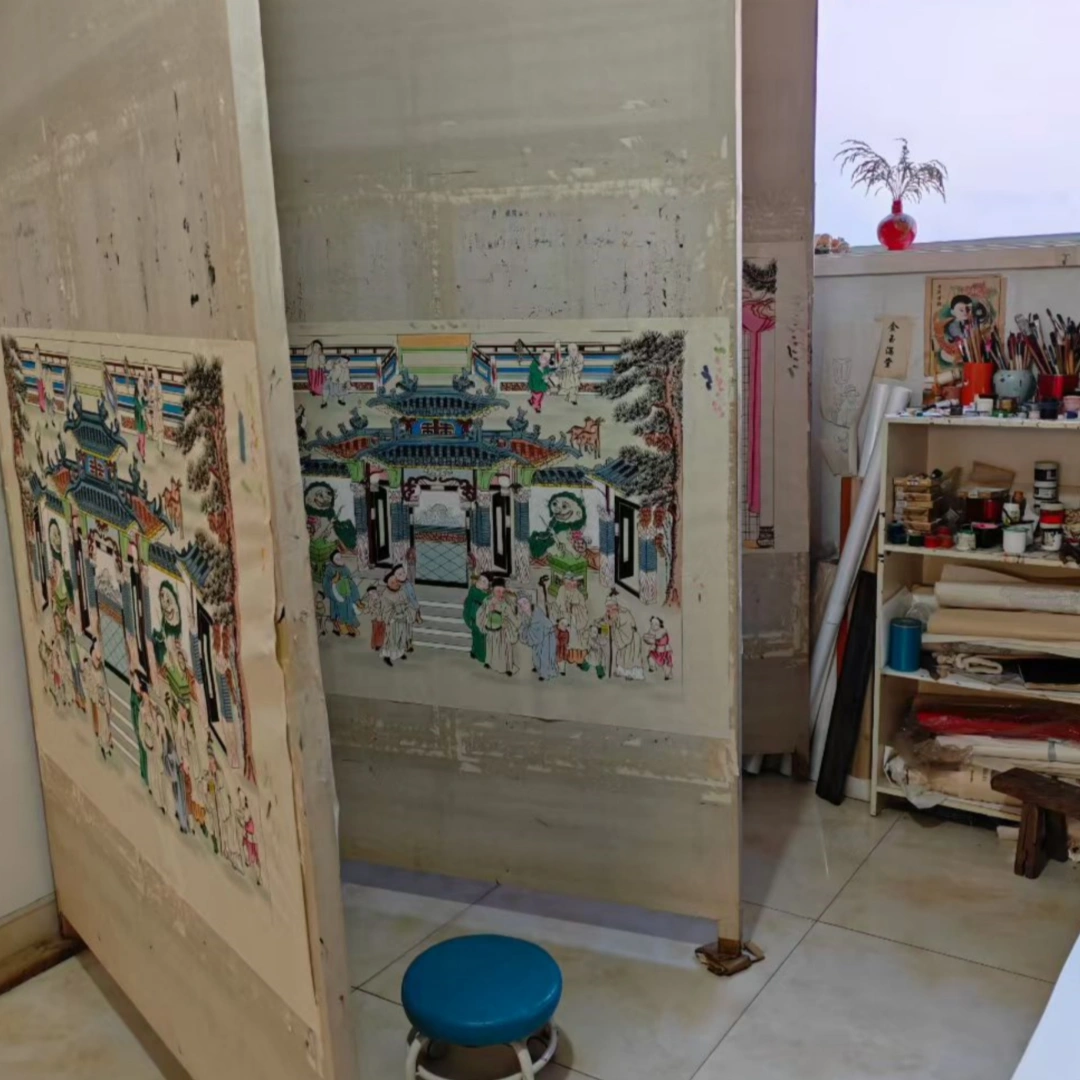
In the early Qing Dynasty, Puhui New Year Painting absorbed elements of literati painting, bridging the gap between refined Chinese scroll painting traditions and vernacular folk art painting. During the Jiaqing period, it further incorporated techniques from the woodblock New Year paintings of Yangliuqing in Tianjin and Yangjiabu in Weifang. The Qianlong to Xianfeng periods marked the peak of development and maturity for Puhui New Year Painting, with a large number of painting artists emerging in Gaomi. Workshops flourished, merchants competed to transport and sell the works, and Puhui New Year Paintings spread far and wide across the country.
One of the greatest values of Puhui New Year Painting lies in its role as a living witness to the historical transition from hand-painted to woodblock-printed New Year art in China — from pure hand-painting (Puhui New Year Painting), to half-print half-painting (absorbing Yangliuqing techniques), to fully woodblock printing. This evolution makes it a key to unlocking the history of Chinese New Year painting evolution, and a meaningful Chinese lucky charm in any feng shui home decor setting. Today, collectors and museums alike treasure it as an essential Chinese folk art painting style that has shaped the nation’s visual culture.
3: Ash-Pouncing Draft — One Draft, Multiple Copies
What is “Ash-Pouncing” (Puhui)?
Ash-pouncing means: burning willow branches into ash, drawing the outline as a master template, and making multiple copies at once. The artist uses a willow charcoal stick to sketch the outline on paper, then covers it with a fresh sheet of rice paper painting and presses by hand — the charcoal outline transfers onto the new paper. One draft can yield several copies. In an era without copy machines, this was the folk artist’s most ingenious “reproduction” technique — a true masterpiece of Chinese decorations home and a testament to the ingenuity behind every great folk art painting.
The specific production steps are as follows:
Step 1: Making Charcoal Sticks. Cut dry willow branches into segments, seal them in an iron container and place over a fire. When smoke begins to emit from the container, remove it and let cool — the charcoal sticks are now ready.
Step 2: Drafting (Drawing the Ash Draft). Using the willow charcoal stick as a drawing tool, sketch the outline of the New Year painting on paper. This requires years of practice — too much pressure and the charcoal stick will break or even crumble into powder; too little pressure and the line won’t show — a challenge that makes scroll painting Chinese truly special. This drafting method is unique among all Chinese folk art painting traditions.
Step 3: Intensifying the Ash Lines. Use the charcoal stick to deepen the lines on the completed draft, or grind the charcoal into powder and mix with water to make ink, then apply with a brush.
Step 4: Ash-Pouncing (Puhui). Using the intensified draft as a master template, cover it with a fresh sheet of rice paper painting paper and press by hand to transfer the charcoal outline onto the new paper. One draft can be used to pounce multiple copies — this is how “Puhui” (ash-pouncing) got its name. The use of rice paper painting paper is essential here, as its natural fiber texture allows the charcoal lines to transfer cleanly and evenly.
Step 5: Outlining (Ink Tracing). Using a brush dipped in light ink, trace clear outlines over the pounced charcoal draft — a technique that echoes the disciplined linework of traditional Chinese scroll painting.
Step 6: Dusting. Gently sweep the traced draft with a feather duster to remove any lingering charcoal particles from the paper surface, revealing a clean rice paper painting ready for coloring.