
Call for Price
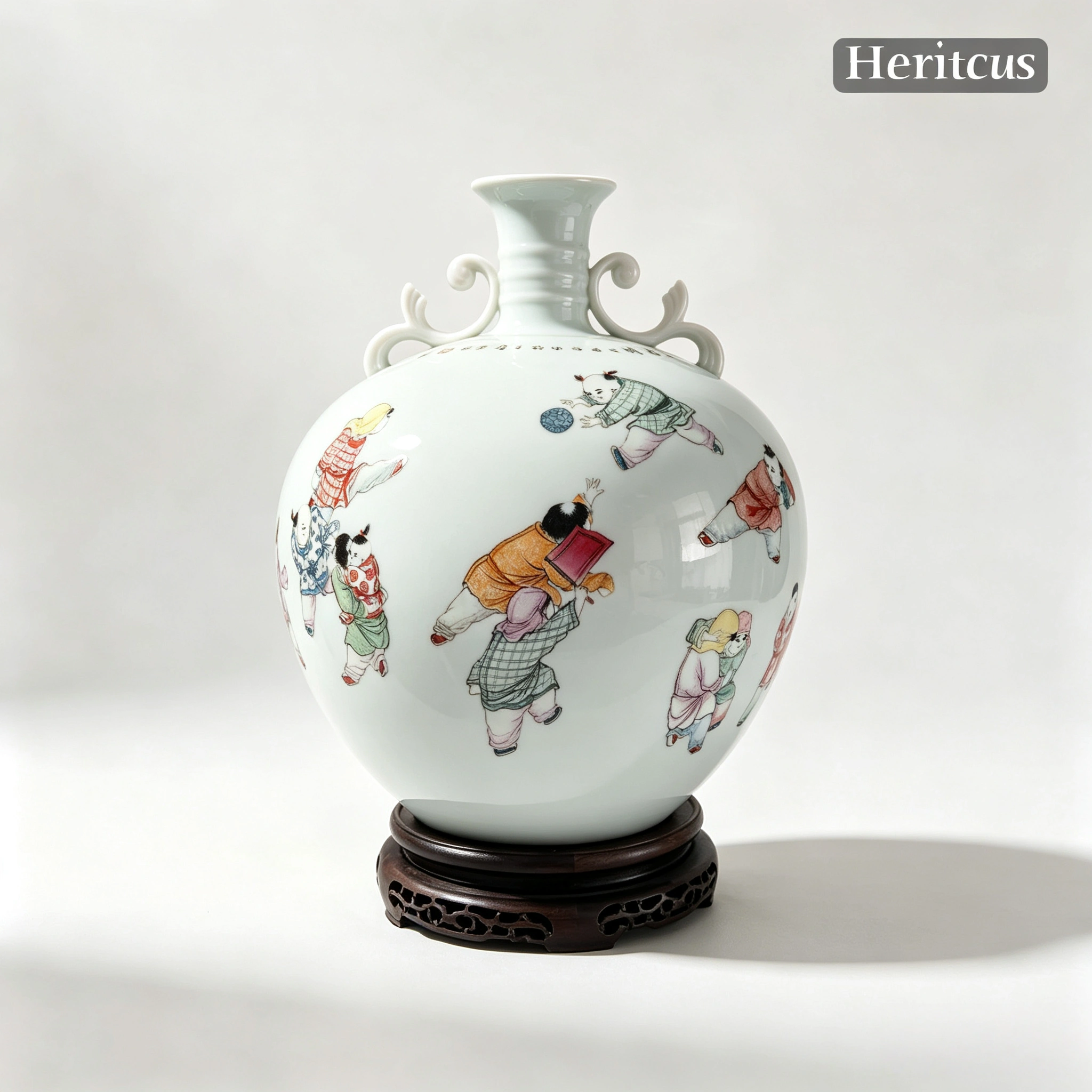
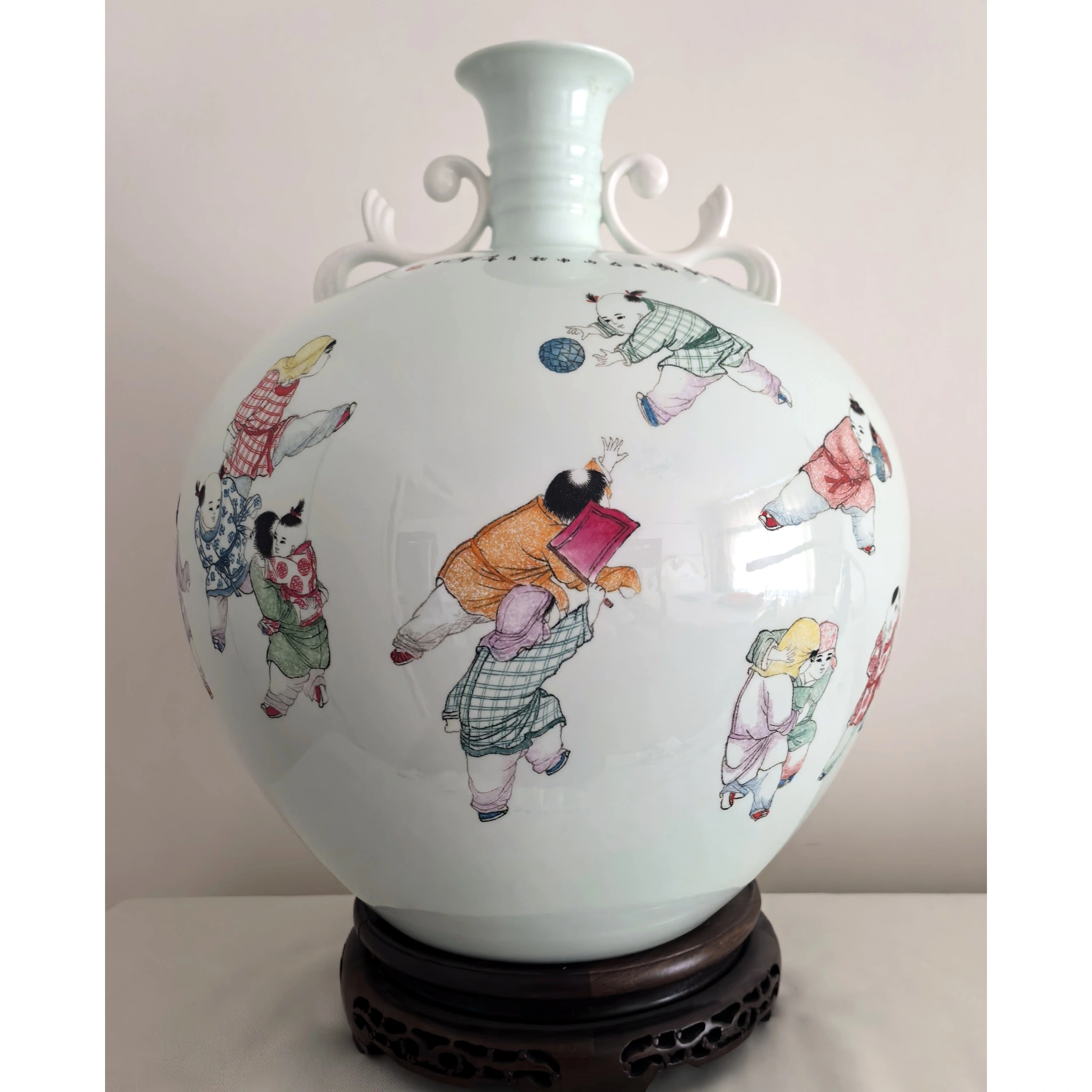
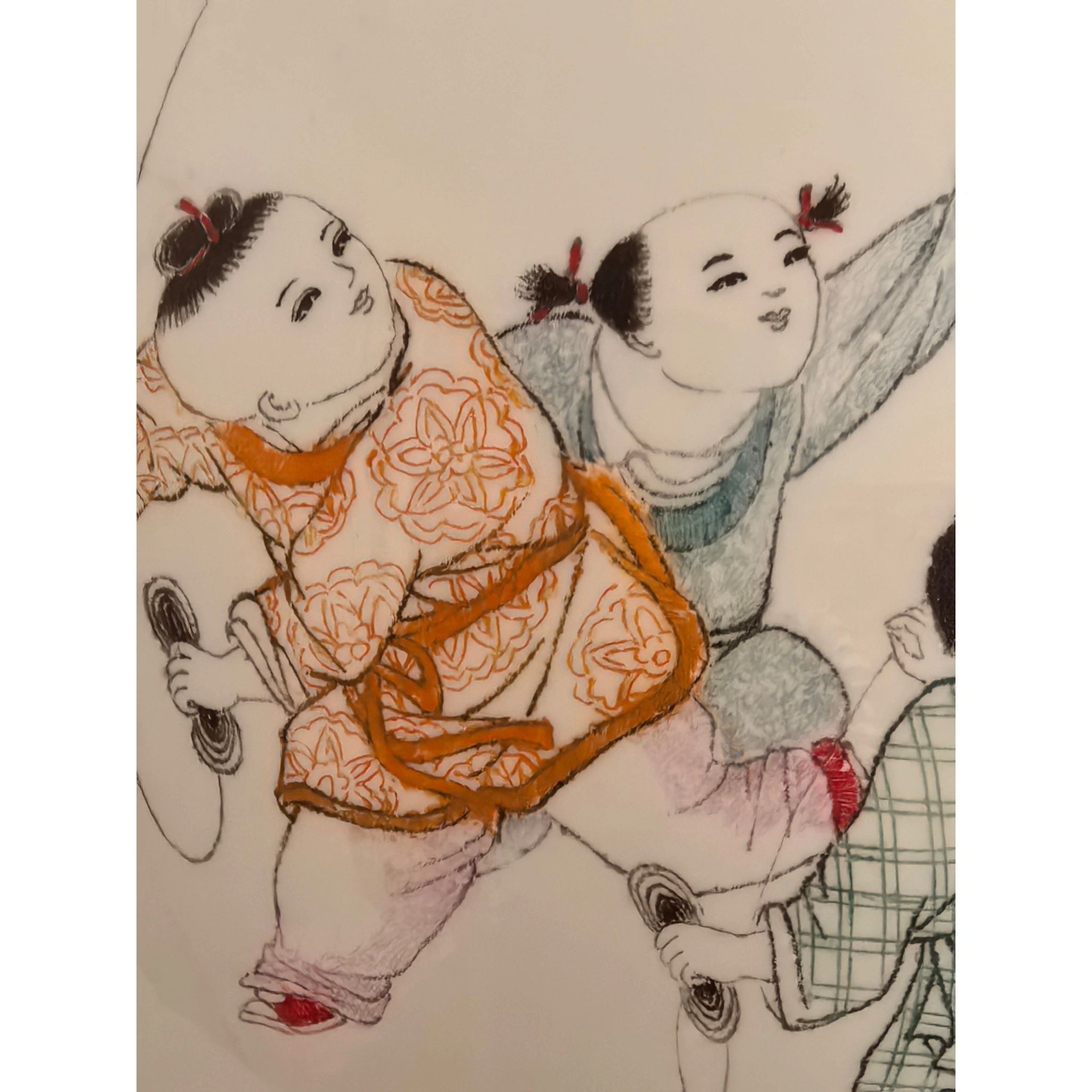
A master artisan hand-engraves this Luqing celadon vase with a Children at Play scene. Luqing celadon ranks first among the world‘s four great celadons, with a kiln history spanning over a thousand years. The celestial globe form with double handles symbolizes completeness, while the Children at Play motif carries blessings for health and good fortune. a substantial display piece available by private viewing.
Master artisans hand-engrave this Luqing celadon vase with a Children at Play scene. Luqing celadon ranks first among the world‘s four great celadons, alongside Longquan celadon of China, Korean celadon, and Japanese celadon. It originated in the Song Dynasty and was successfully revived in 1972 in Zibo, Shandong. The artisans make it from talc and fire it at over 1300°C in a reduction flame. This process creates a translucent, jade-like glaze known as “blue sky and white cloud.” Each kiln yields very few finished pieces, especially vase forms with complex shapes, making them rare and highly treasured.
This vase features the classic celestial globe form with a rounded body, a tall cylindrical neck, and a slightly flared mouth. Two decorative handles frame the neck, adding symmetry and elegance. The name “tianqiuping” refers to its globe-like shape, which symbolizes completeness and perfection. The double handles echo ancient bronze ritual vessels, giving the piece a sense of historical depth and formal dignity. At 40cm tall, this vase commands attention. The generous surface provides an ideal canvas for the hand-engraved scene.
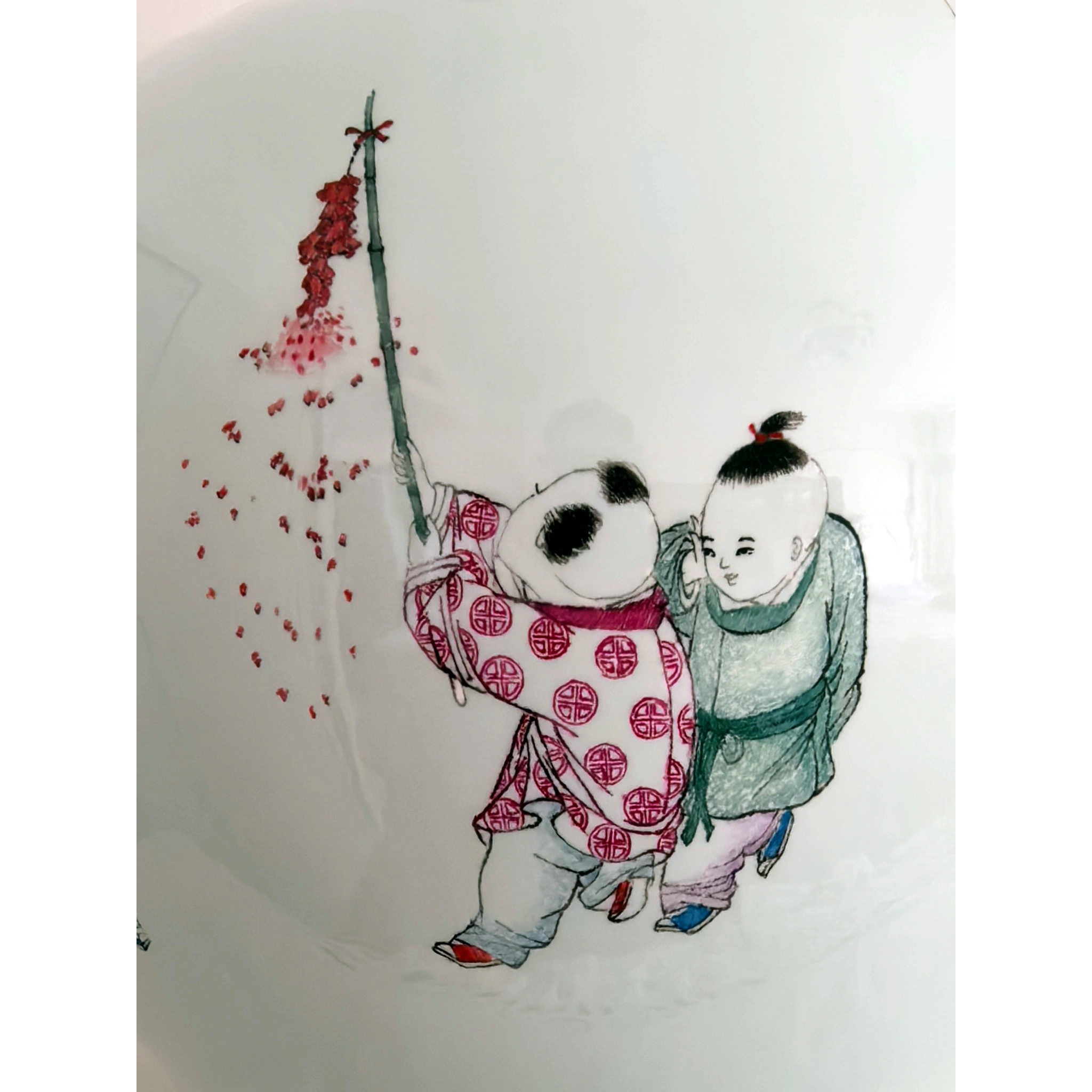
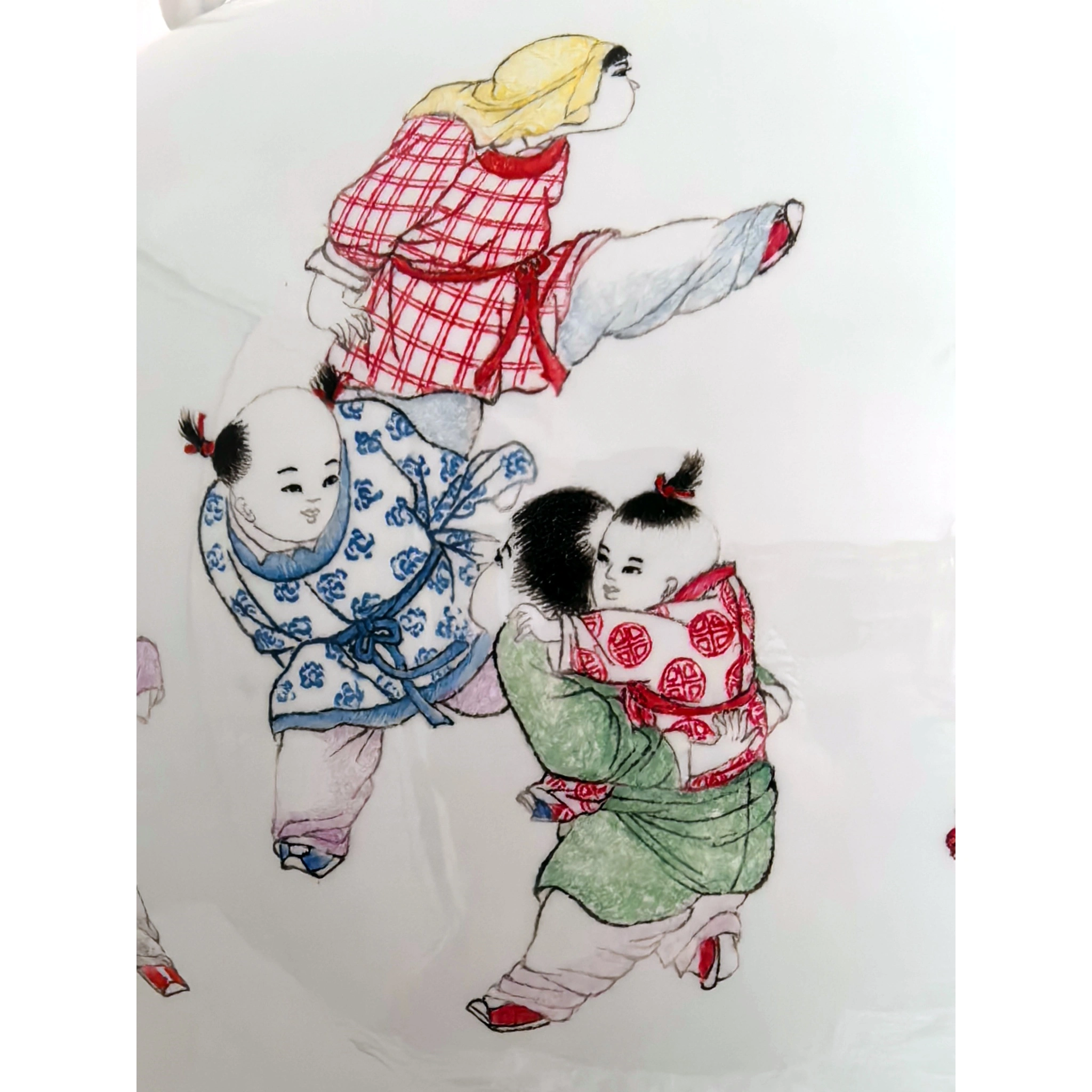
The Children at Play motif carries deep meaning in Chinese art. Children represent vitality, innocence, and the promise of future generations. Scenes of children playing in gardens or courtyards symbolize wishes for healthy offspring and family prosperity. In Chinese culture, children embody the renewal of life and the continuation of the family line. This theme has been popular in Chinese ceramics and paintings since the Song Dynasty, reflecting the universal hope for children to grow up healthy, happy, and strong. The engraving captures a joyful moment — children at play, full of energy and life.
Luqing celadon carries a kiln legacy that spans over a thousand years. In 1982, a Luqing carved porcelain desk set won the gold medal at the 34th Munich International Handicrafts Fair in Germany. This marked the first international gold medal for Chinese ceramic art since 1949. In 1987, talc-based Luqing celadon won another gold medal at the “Eureka” International Invention Expo in Brussels.
The renowned poet Zhao Pucho once wrote after visiting Luqing celadon: “Lustrous and radiant, the Luqing porcelain — as if held by celestial hands.” Luqing celadon has also served as a national gift to foreign dignitaries.
Porcelain engraving originated in Zibo during the Qing Dynasty (1776). The Beijing Palace Museum and the Taipei Palace Museum hold the earliest surviving examples. By the late Qing Dynasty, master engravers like Hua Fa, Zhu Youlin, and Chen Zhiguang emerged. Nobles and officials in the imperial court treasured their works. This vase features a hand-engraved Children at Play scene across its surface — children playing in a garden setting, with delicate lines capturing their movements and expressions. The artisan carves each stroke with precision, using only a few engraving tools and a small hammer. Porcelain engraving integrates painting, calligraphy, and seal carving. The engraved lines are permanent — one misplaced stroke cannot be erased. The jade-like celadon glaze provides a perfect backdrop, its subtle green tones evoking the freshness and vitality of spring.
This Luqing celadon vase belongs to our Masterpiece Collection. A master artisan creates each piece as a one-of-a-kind work, dedicating decades of skill to perfecting the craft of porcelain engraving. Each piece represents a singular expression of the artisan’s mastery — to be cherished, studied, and passed down through generations. The Children at Play theme, the celestial globe form, and the thousand-year celadon tradition all converge in this exceptional piece.
This piece is available exclusively by private viewing. We invite you to request a personal consultation to learn more about its creation and the artisan behind it.
100% hand-engraved — a master artisan creates each piece using traditional techniques
Luqing celadon — one of the world’s four great celadons, with a thousand-year history
Double-handled vase form — a classic shape with a sense of completeness and perfection
Children at Play motif — carries blessings for health and good fortune
National intangible cultural heritage — a living piece of Chinese craft history
Generous size — 40cm tall, perfect for display as a centerpiece
Masterpiece Collection — a one-of-a-kind work for the discerning collector
Approximately $4,200 – $14,000 USD. Final price is determined by design complexity, dimensions, and craftsmanship requirements. Please inquire for a detailed quotation.
Each masterwork is made to order — there is no ready stock. Please allow approximately 60 days for creation and dispatch, as each piece undergoes a meticulous, handcrafted process.
Upon receiving your inquiry, we will contact you to discuss the technical details, artistic considerations, and provide a detailed, no-obligation quote. We will keep you informed of the progress throughout the entire process.
For full details, or to begin your bespoke commission, please refer to our Masterwork Ordering & Delivery Policy below or contact us directly.
Reviews
There are no reviews yet.