
China‘s Unique Hand-Painted New Year Art · Six Centuries of Folk Freehand Beauty
Puhui New Year Painting is a unique Chinese folk art form that exists only in Gaomi, Weifang, Shandong — making it the sole New Year painting genre of its kind in China and the world. It is renowned as “a unique treasure of China” and hailed as the “living fossil” of Chinese New Year painting history. In 2006, Gaomi Puhui New Year Painting was inscribed on the first batch of China‘s National Intangible Cultural Heritage list.
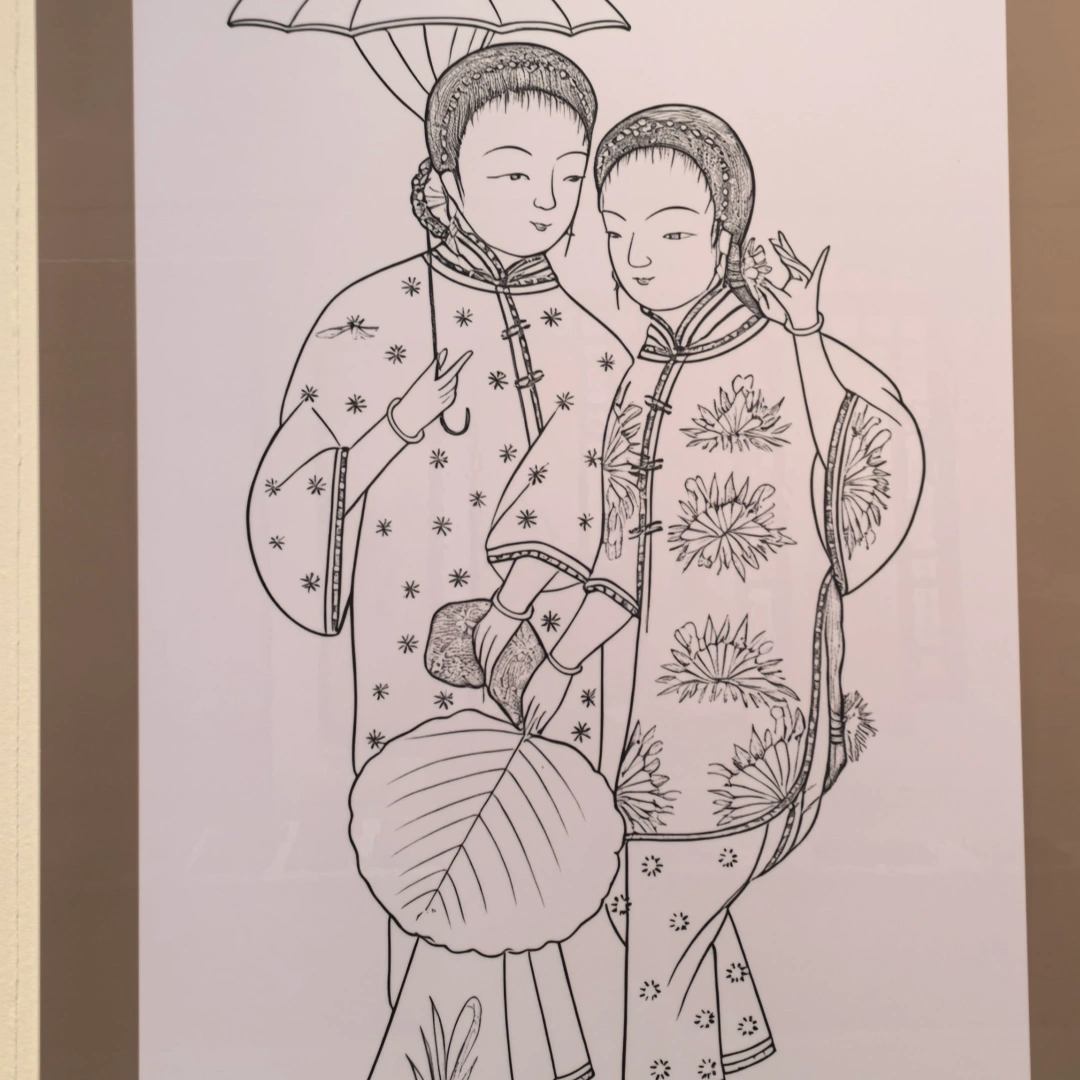
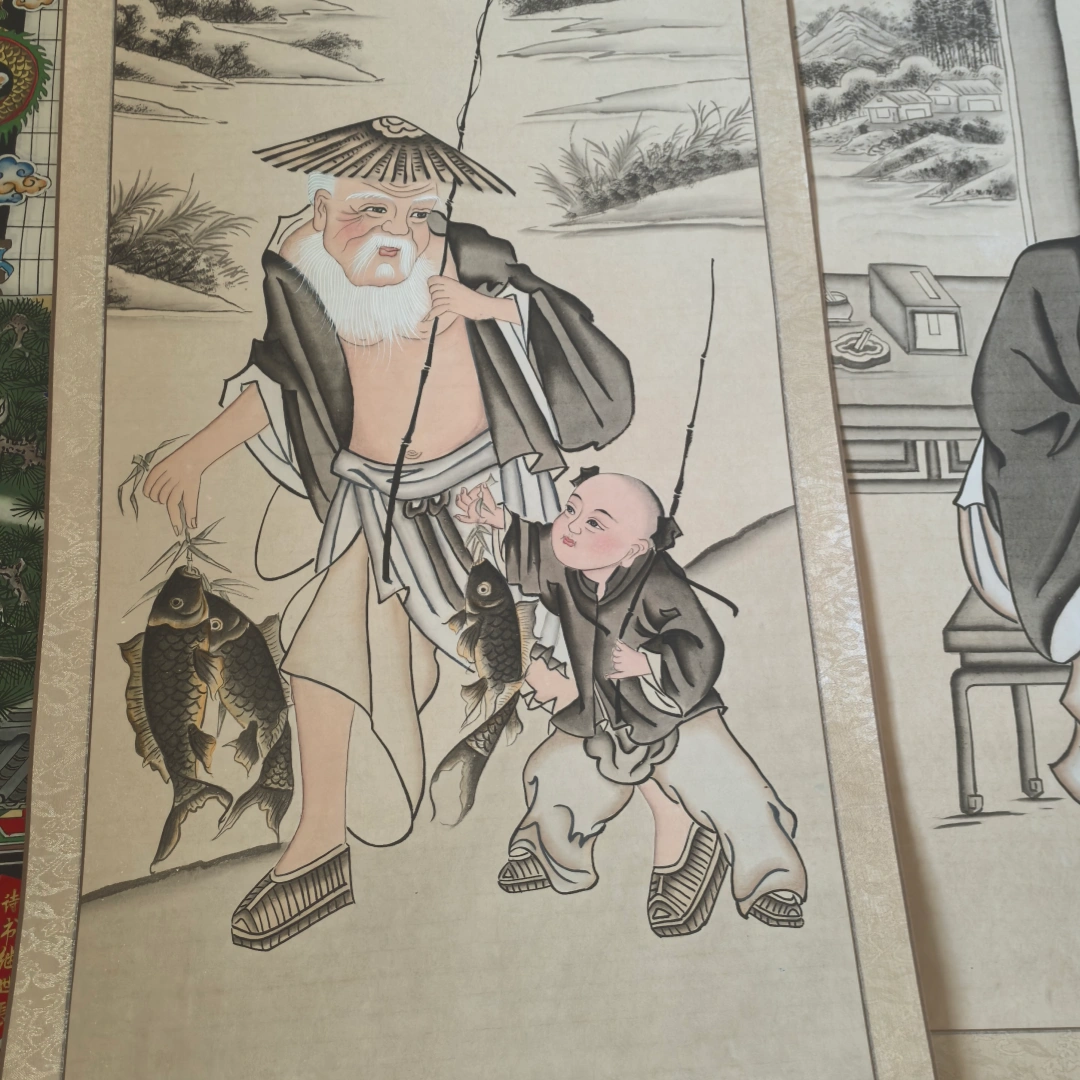
The style of Puhui New Year Painting is a folk freehand beauty that is rustic yet spirited, vibrant yet refined. Bold reds and greens collide in striking contrast, with flowing, unrestrained lines and plump, rounded figures — chubby-cheeked ladies and children whose delicate eyebrows and eyes reveal a quiet elegance. From a distance, the paintings appear lively and festive; up close, the intricate details reveal themselves. It is a quintessential example of “half meticulous, half freehand” in Chinese folk art.
Defined by its ash-pouncing draft and hand-painted finishing, it stands apart among hundreds of Chinese New Year painting styles as a precious testament to the transition from hand-painted to woodblock-printed New Year art — making it a treasure for collectors of chinese decorations home.
Puhui New Year Painting is said to have originated during the Chenghua period of the Ming Dynasty (1465-1487) , with a history of over five hundred years.
Its beginnings are tied to the livelihoods of a group of folk painters. According to legend, the founding artist was a surnamed Wang from Gongpomiao Village in northern Gaomi (now Dongfeng Village, Xiiazhuang Town) . To make a living, the family began copying literati paintings and temple murals to sell at market stalls. Through continuous experimentation, they turned readily available willow branches into charcoal drawing sticks and pickled turnips into stamping and pattern molds. Thus, Puhui New Year Painting — infused with the earthy spirit of folk life — was born.
In the early Qing Dynasty, Puhui New Year Painting absorbed elements of literati painting. During the Jiaqing period, it further incorporated techniques from the woodblock New Year paintings of Yangliuqing in Tianjin and Yangjiabu in Weifang. The Qianlong to Xianfeng periods marked the peak of development and maturity for Puhui New Year Painting, with a large number of painting artists emerging in Gaomi. Workshops flourished, merchants competed to transport and sell the works, and Puhui New Year Paintings spread far and wide across the country.
One of the greatest values of Puhui New Year Painting lies in its role as a living witness to the historical transition from hand-painted to woodblock-printed New Year art in China — from pure hand-painting (Puhui New Year Painting), to half-print half-painting (absorbing Yangliuqing techniques), to fully woodblock printing. It serves as a key to unlocking the history of Chinese New Year painting evolution, and makes for a meaningful chinese lucky charm in any feng shui home decor setting.
What is “Ash-Pouncing” (Puhui)?
Ash-pouncing means: burning willow branches into ash, drawing the outline as a master template, and making multiple copies at once. The artist uses a willow charcoal stick to sketch the outline on paper, then covers it with a fresh sheet of rice paper painting and presses by hand — the charcoal outline transfers onto the new paper. One draft can yield several copies. In an era without copy machines, this was the folk artist‘s most ingenious “reproduction” technique — a true masterpiece of chinese decorations home.
The specific production steps are as follows:
Step 1: Making Charcoal Sticks. Cut dry willow branches into segments, seal them in an iron container and place over a fire. When smoke begins to emit from the container, remove it and let cool — the charcoal sticks are now ready.
Step 2: Drafting (Drawing the Ash Draft). Using the willow charcoal stick as a drawing tool, sketch the outline of the New Year painting on paper. This requires years of practice — too much pressure and the charcoal stick will break or even crumble into powder; too little pressure and the line won‘t show — a challenge that makes scroll painting chinese truly special.
Step 3: Intensifying the Ash Lines. Use the charcoal stick to deepen the lines on the completed draft, or grind the charcoal into powder and mix with water to make ink, then apply with a brush.
Step 4: Ash-Pouncing (Puhui). Using the intensified draft as a master template, cover it with a fresh sheet of paper and press by hand to transfer the charcoal outline onto the new paper. One draft can be used to pounce multiple copies — this is how “Puhui” (ash-pouncing) got its name.
Step 5: Outlining (Ink Tracing). Using a brush dipped in light ink, trace clear outlines over the pounced charcoal draft.
Step 6: Dusting. Gently sweep the traced draft with a feather duster to remove any lingering charcoal particles from the paper surface.
After the ash-pouncing draft comes the true hand-painting craftsmanship. Puhui New Year Painting requires over twenty steps to complete. Gaomi folk artists have summarized this process in a vivid rhyme:
“Bold brush strokes, sweeping colors, Careful face painting, delicate brows drawn with skill, For the most charming effect, pickle-stamped flowers adorn the gown.”
Among these twenty-plus steps, the following are the most critical — they determine the “spirit” and “soul” of each Puhui New Year Painting:
| Step | Description |
|---|---|
| Face & Hand Base | Apply a mixture of white with bright red or pink to the figures‘ faces and hands, giving them a resilient, soft, lifelike appearance |
| Eye Setting | Paint the white of the eyes using white pigment |
| Eye Dotting (Pupil Painting) | Apply light ink to the inner eye, then dot the pupil with dark ink — “opening the eyes and brows” is the critical moment that determines a painting‘s success |
| Color Application | Apply bold colors — primarily pink, emerald green, and soft yellow — with occasional gold accents |
| Gold Tracing | Outline key areas with golden lines for a luxurious finish |
| Pickle-Stamping | Use carved pickled turnips as stamps to imprint floral patterns |
| Gloss Oiling | Apply gloss oil to major areas of the painting to achieve a brilliant, eye-catching effect |
A complex Puhui New Year Painting, such as a portrait of a beautiful woman, requires three to five days to complete — a true labor of love for chinese lucky charm and zen home decor enthusiasts.
Puhui New Year Painting is celebrated as a “folk freehand painting.” Its artistic style is distinctive and unparalleled:
Bold & Unrestrained Brushwork: Flowing, spirited lines with a strong freehand flavor and bright, lively tone — a hallmark of chinese scroll painting
Color in Place of Ink: Vivid color blocks with strong contrast, creating a rich and magnificent composition
Simplified Yet Elegant Forms: Figures are depicted with full, rounded faces — plump cheeks and large ears — yet retain a refined, handsome quality
Refined & Bold in Balance: Intricate details like pickle-stamped patterns sit alongside sweeping brushstrokes, creating a dynamic interplay of refinement and boldness
With its simple yet refined forms, bold and spirited brushwork, and a strong freehand ink-painting aesthetic, Puhui New Year Painting draws its themes from mythological tales, historical figures, landscapes, flowers, and opera stories, making it beloved by people across all walks of life. It is a perfect addition to any chinese decorations home or zen home decor setting.
In 2006, Gaomi Puhui New Year Painting was inscribed on the first batch of China‘s National Intangible Cultural Heritage list.
Today, Puhui New Year Painting has gone global. In 2025, Gaomi hosted the “Shared Beauty — China-South Korea Puhui New Year Painting Academic Exchange” , promoting the living heritage on the international stage.
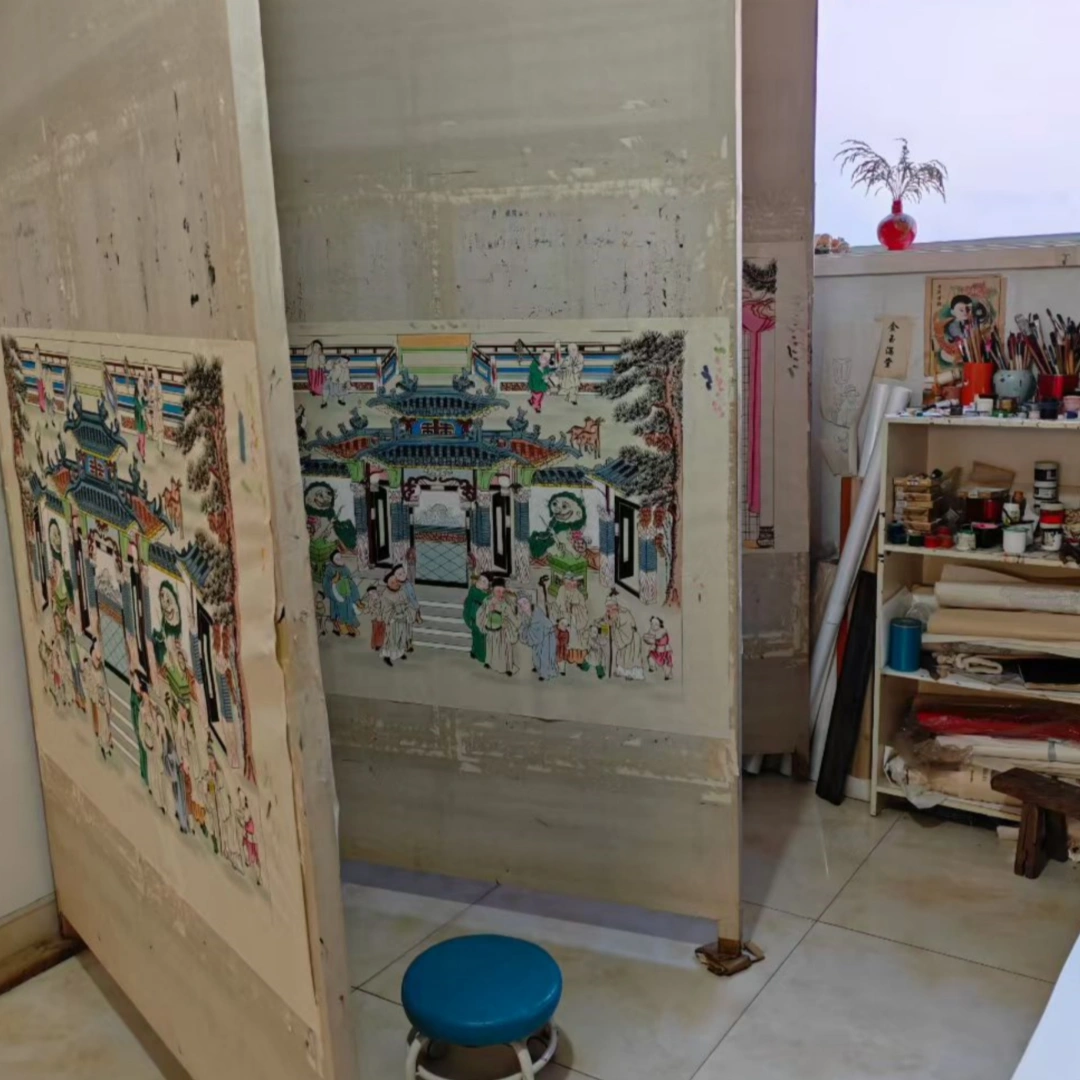
Representative works such as “Ancestral Hall,” “God of Wealth,” and “Sisters in Conversation” hold significant artistic research, appreciation, and collection value. They reflect the customs and traditions of Chinese folk society and preserve the traditional skills of Chinese folk painting — making them treasured chinese lucky charm for any feng shui home decor setting.
Handcrafted Puhui New Year Painting in standard classic styles — ready for you to own.
| Item | Details |
|---|---|
| Product Types | Puhui New Year Painting home decor (traditional themed paintings, hanging scrolls, cultural creative pieces, and more) |
| Delivery Timeline | Depends on painting size and complexity — typically 15-30 days |
| Pricing | Fixed pricing — transparent and clear |
| Theme Selection | Choose from traditional themes (beautiful ladies, lucky children, opera figures, auspicious flowers, etc.) |
| CTA | 【Shop Now】→ Link to product page |
Tailor-made to your exact dimensions, themes, and style preferences — one-on-one consultation with master artisans.
| Item | Details |
|---|---|
| Product Types | Premium Puhui New Year Painting customization (any theme, any size) |
| Delivery Timeline | Depends on technical solution complexity — typically 2-3 months |
| Pricing | Inquiry-based — customized quotation |
| Customization | Fully bespoke — no limits |
| CTA | 【Inquire Now】→ Link to contact page |
Have questions about our Puhui New Year Paintings? We‘re here to help.
| Channel | Contact |
|---|---|
| sales@heritcus.com | |
| +86 1379280546 | |
| +86 1379280546 |