
Ever felt your tea table lacked soul?
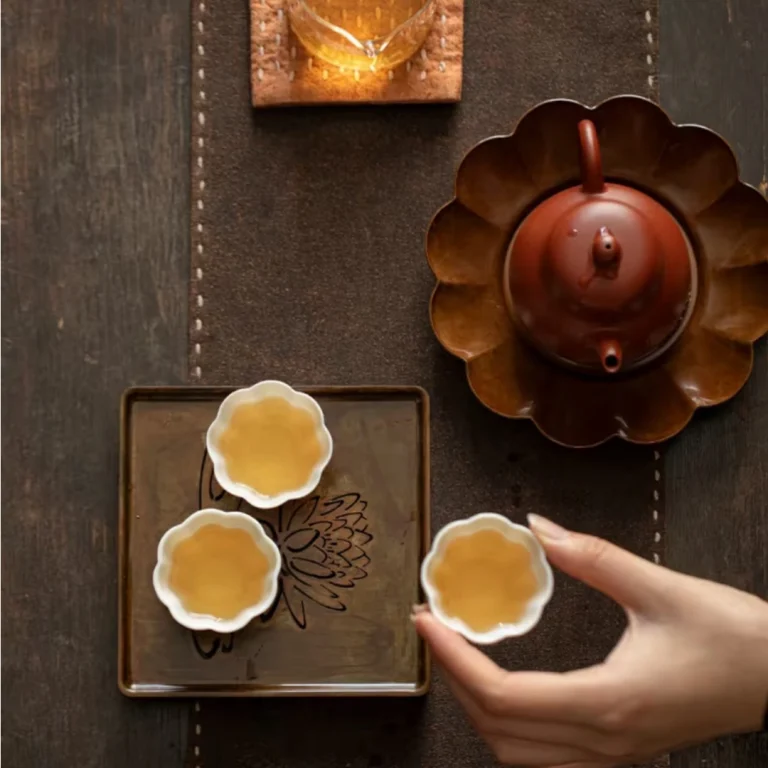
True elegance is not found in glittering gold or delicate porcelain – it lives in the warm, understated glow of copper. A hammered copper Chinese tea set carries the imprint of countless blows, each dent telling the story of a craftsman’s patience. From a flat sheet of metal, it is slowly shaped into a kettle with graceful curves, a tea scoop with rippling textures, or a tiny incense burner that holds the quiet of a meditation hour. These hammer marks are not decorations – they are the artisan’s breath and time made visible.
The art of hammered copper, known in Chinese as chuí yè (hammering and shaping), demands extraordinary skill. A single handmade copper kettle requires dozens of steps: cutting, hammering, annealing, precision forging, shaping, chiselling, and soldering – using over ten different techniques. From sheet to finished piece, a kettle endures at least ten thousand, sometimes tens of thousands, strikes. The copper sheet is only about one millimetre thick, so the force must be just right – too light and the shape fails, too heavy and the metal deforms. What is even more astonishing is that true masters can achieve seamless, one‑piece construction – the spout, body, and handle all hammered from a single piece of copper, without any weld. This dedication to “cannot rush, cannot skimp” makes every piece of this Chinese tea set truly one of a kind.
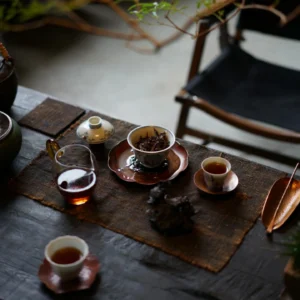
The beauty of hammered copper lies in its perfect balance of function and aesthetics. Copper conducts heat twice as well as aluminium and five times better than iron – a copper kettle heats quickly and evenly, producing water that is exceptionally soft and sweet. Below are the common types of hammered copper tea ware and their typical uses.
✅ Boiling Water – The Copper Kettle
The kettle is the undisputed centrepiece of any Chinese tea set. Whether you are boiling water for a delicate green tea or simmering aged pu’er over a charcoal stove, the copper kettle is an ideal choice. Copper has natural antibacterial properties and also releases trace amounts of beneficial copper ions into the water. On a winter evening, the kettle sings a low, mellow hum over the fire – far gentler than the shrill whistle of stainless steel. Its fine hammered surface glows softly in candlelight, as though the kettle itself is breathing in the aroma of tea.
✅ Measuring and Admiring Tea – The Copper Tea Scoop (Chá Zé)
The tea scoop is one of the essential tea ceremony tools – it is used to transfer leaves from the canister into the pot. As early as the Tang dynasty, Lu Yu’s Classic of Tea mentioned scoops made of copper, iron, or bamboo. A hand‑forged copper scoop features dense hammer patterns inside, reminiscent of a bamboo grove in the mountains. It allows precise measurement and also serves as a beautiful object for appreciating the dry leaves. Its smooth edges do not crush the tea cake, and its weight gives a satisfying sense of ritual.
✅ Prying and Clearing – Copper Tea Needle and Tea Spoon
The copper tea needle is firm yet not brittle – it can easily pry apart compressed pu’er cakes and also clear clogged spouts. The copper spoon has a slightly upturned tip, perfect for scooping loose leaves from the jar. A full set of these copper tea ceremony tools arranged on the table instantly elevates the formality and mindfulness of the session.
✅ Holding the Cup – Copper Tea Tray (Saucer)
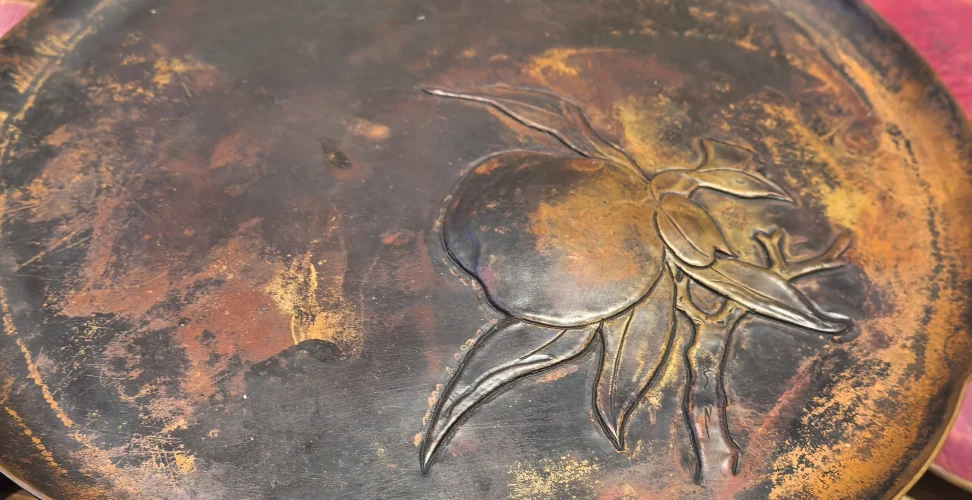
The tea saucer, or cup holder, supports the teacup or bowl, protecting your fingers from heat and keeping the table dry from spills. A copper saucer’s warm hue complements the cup beautifully, making it an indispensable accent on the tea table.
✅ Resting the Lid – Copper Lid Rest
The lid rest is a small but thoughtful accessory – it holds the pot lid or cup lid when not in use, keeping it clean and preventing moisture from staining the table. It is a subtle detail that shows respect for every step of the tea ritual.
✅ Burning Incense – Copper Incense Burner
A wisp of fine incense often accompanies a pot of tea. Placed beside the tea tray, the copper incense burner fills the air with sandalwood or agarwood, blending with the tea’s fragrance to create an atmosphere of serene Chinese elegance.
Many people worry about copper tarnishing or turning black. But oxidation is perfectly natural – and for true connoisseurs, the patina is the soul of a copper Chinese tea set. A good copper piece is not kept shiny by polish – it is “raised” through daily use, tea stains, and heat, gradually acquiring a warm, matte glow that feels like old jade. No coating, no harsh buffing – just time and gentle handling.
1. Daily Care – Gentle and Regular
After each use, wipe the surface with a soft, dry cloth. Store it in a dry, ventilated place away from kitchen grease and humidity. For cleaning, use a soft sponge and mild neutral detergent or plain water. Never use dish soap, bleach, or acidic/alkaline cleaners, and never scrub with steel wool – acids will corrode the copper and destroy the precious patina permanently.
2. Seasoning a New Kettle – The First Boil
A new copper kettle should not be used straight away. It needs to be “opened” (seasoned): boil some tea leaves in it, allowing the steam and heat to dissolve any protective coating; wipe off any residues with a damp soft cloth, discard the water, then place the empty kettle on an electric stove, turn off the heat, and let it dry naturally. It is then ready for regular use.
3. Treating Tarnish – Gentle Restoration
If the surface becomes slightly black or develops green verdigris, gently rub it with a lemon slice dipped in fine salt, then rinse with clean water and pat dry. This mild method restores the lustre without harming the metal. However, if you wish to preserve the patina, avoid any contact with acidic substances.
4. Cultivating the Patina – A Gift of Time
The most natural way is to handle the copper frequently with clean, dry hands – the slight warmth and natural oils from your skin will, over months, form an even, dense oxide layer. Alternatively, you may apply a whisper‑thin coat of olive oil or tea oil and let it absorb. Yellow copper oxidises in air – it may first turn reddish or dull, but with regular soft wiping and avoiding prolonged moisture, a beautiful matte patina will emerge in about three months – like the pages of an old book, not flashy but deeply calming. This transformation cannot be rushed, but each subtle gleam is a quiet conversation between you and your Chinese tea set.
❌ What to Avoid
Never use steel wool, strong acids, or abrasive cleaners – they will ruin the surface and prevent any future patina.
Fingerprints or water droplets left on copper can cause verdigris – always dry thoroughly after use.
Keep copper away from prolonged contact with salt or acidic foods (vinegar, fruit juice), which can cause discoloration or green spots.
✨ One Piece, a Lifetime of Stories
This ancient copper tone has been cherished by Chinese culture for millennia. It does not chase fashion – it seeks inner peace. A hammered copper tea ware piece brings the artisan’s dedication, the warmth of daily ritual, and the quiet accumulation of years into your home. Whether you are boiling water, measuring leaves, or sharing a cup with friends, it weaves classical Chinese aesthetics into every small moment – inviting you to savour the serene beauty of time itself.