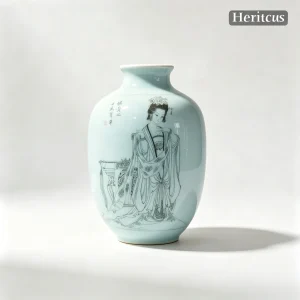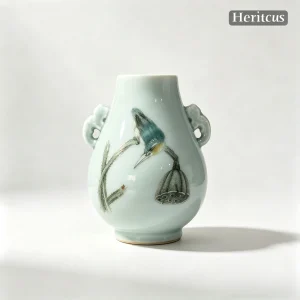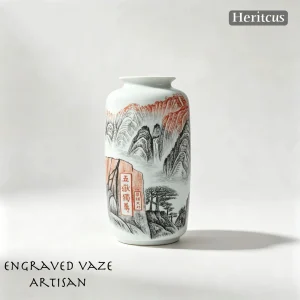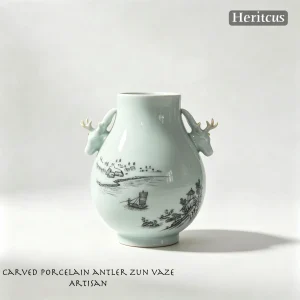
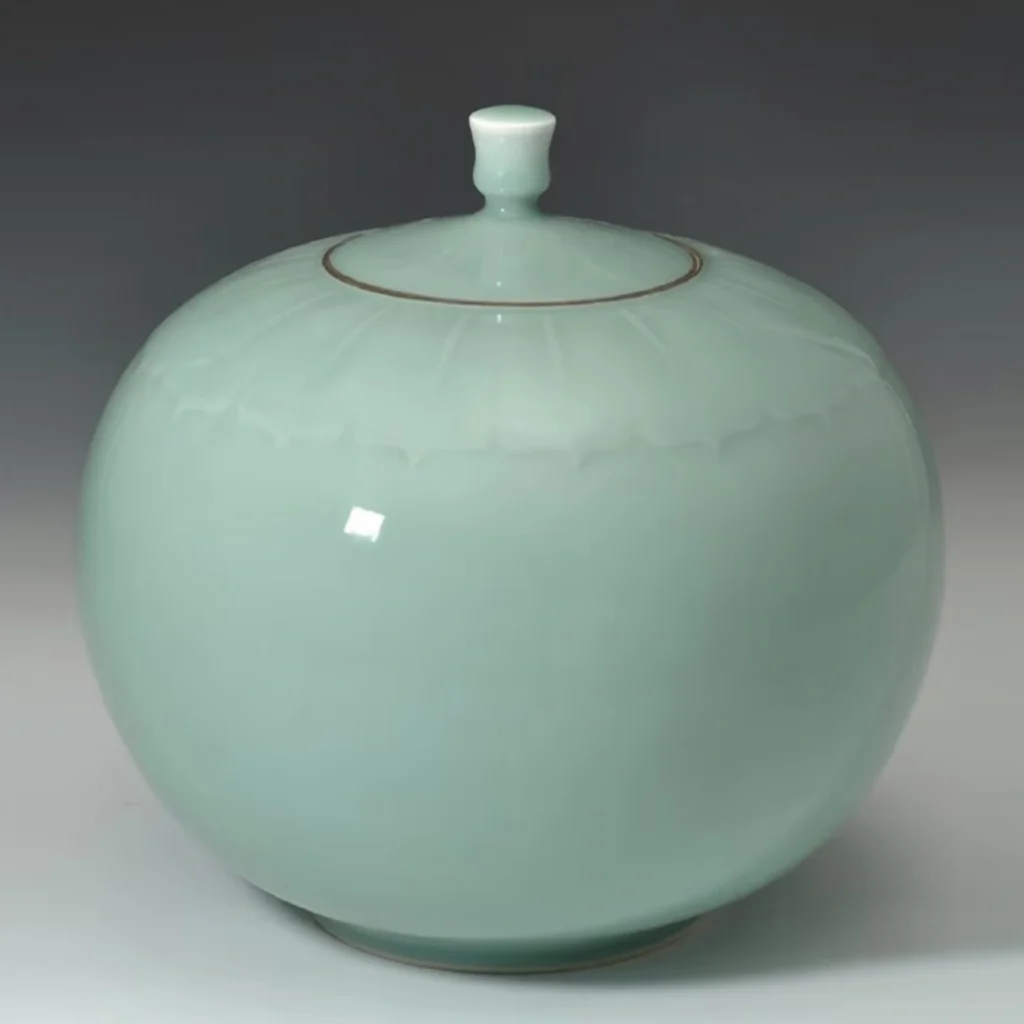
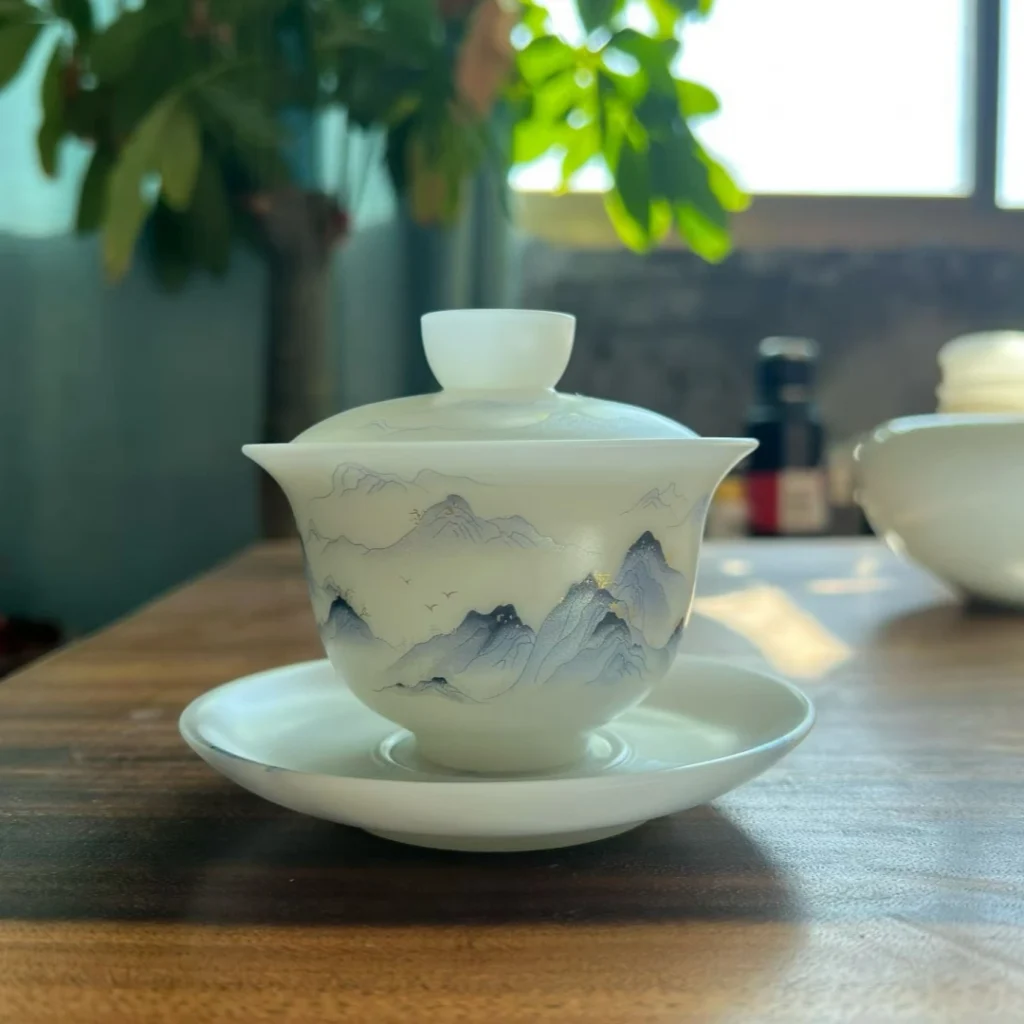
—— The Finest of the World‘s Four Great Celadons Celadon as Jade · Clear as Mirror · Resonant as Chime —— A Masterpiece of Hand-Engraved Oriental Porcelain Artworks
Lu Qing Celadon is one of China’s premier cultural porcelain types, ranking first among the world’s four great celadons — alongside Longquan Celadon, Japanese Celadon, and Korean Celadon. It is celebrated for its exquisite texture, glossy glaze, and exquisite engraving, earning it the title of “a unique treasure of the porcelain world” among ceramics experts and collectors of chinese decorations home.
Lu Qing Celadon holds the top position among the four great celadons for two distinctive reasons. First, its glaze color is unmatched — a rare celadon-white translucence that other celadon varieties simply cannot replicate. Second, its integration with hand engraving elevates the decorative arts to a height rarely achieved in contemporary ceramics. Whether crafted as a chinese porcelain vase, celadon plates, or chinese scroll painting wall art, each piece embodies the pinnacle of Oriental ceramic artistry.
The origins of Lu Qing Celadon trace back 1,500 years to the Northern Qi Dynasty. Zibo, Shandong, is a crucial birthplace of northern Chinese celadon. According to the History of Chinese Ceramics: “The Zhaili Kiln in Zibo, Shandong, is the only known northern celadon production site.” As early as the Northern Qi period, the Zhaili Kiln was already producing celadon wares. A celadon lotus zun excavated from this site has been identified as a national first-grade cultural relic. Over the following centuries, the kiln fires of northern celadon flickered on and off. Then in 1972, ceramic researchers in Zibo, building on the traditions of the Zhaili Kiln from the Southern and Northern Dynasties, successfully developed Lu Qing Celadon using talc as the primary raw material. In 1978, Lu Qing Celadon passed technical appraisal by Shandong Province, filling a national gap in celadon production, and received the Shandong Provincial Science Conference Award that same year. A long-lost ceramic art had been reborn in Zibo.
What makes Lu Qing Celadon truly exceptional begins with its unique material composition and firing difficulty. It uses talc as the primary raw material, with talc content in the clay body reaching 40% to 60%. It is fired at temperatures exceeding 1350°C under a reducing flame atmosphere — a process in which the metal oxides in the glaze undergo chemical changes, producing a distinctive jade-green hue. This makes each piece a one-of-a-kind treasure, treasured by collectors of chinese porcelain plates and displayed as a chinese lucky charm in fine homes.
Because the firing mechanism is extremely complex, the celadon glaze color is difficult to control, and no two pieces are exactly alike. In the finest examples, the color appears as celadon-white, with a natural gradient from light to dark from top to bottom. When illuminated, the piece becomes translucent and luminous.
In simple terms: Every piece of Lu Qing Celadon is an improvisation between the kiln fire and the raw materials — impossible to replicate, utterly unique in color and texture. This inherent uniqueness makes Lu Qing Celadon an exceptional medium for feng shui home decor, bestowing any space with a refined, calm presence.
The most enchanting quality of Lu Qing Celadon lies in its one-of-a-kind glaze artistry. The glaze surface transforms naturally within the kiln — every piece is distinctive, with no duplicates. The glaze presents a striking “azure sky and white clouds” effect: greenish-white with a subtle blue tint, reminiscent of a clearing sky after rain — the perfect expression of zen home decor.
After viewing Lu Qing Celadon, the renowned master of Chinese studies Mr. Zhao Puchu was moved to compose this impromptu poem in its praise:
“Radiant and gleaming is Lu Qing Celadon,
As if celestial beings hold jade cups in hand.
With snow-white foam and milk-like tea floating in noonday cups,
In quiet meditation, one savors Zen’s flavor while sipping tea.”
Celadon as jade, clear as mirror, resonant as chime — Lu Qing Celadon elevates the beauty of Oriental celadon to a new pinnacle, making it the perfect gift for weddings, festivals, or housewarmings, and a treasure that will be cherished for generations.
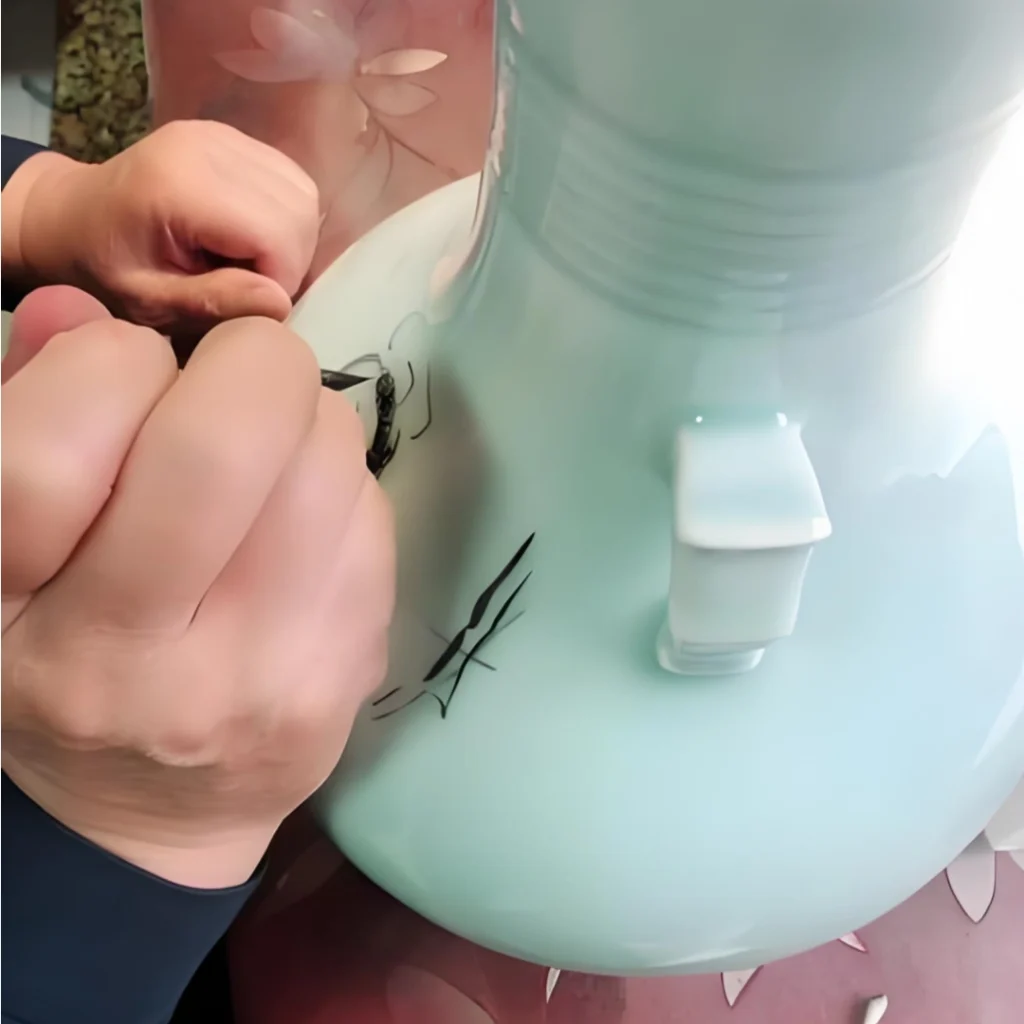
Lu Qing Celadon and hand engraving are a match made in heaven. With its fine texture, hard and resonant glaze, and warm luster, Lu Qing Celadon is the ideal canvas for hand engraving. Using just a few carving knives and a small mallet, artisans can depict landscapes, figures, flowers, birds, and animals on the hard yet smooth celadon surface. This makes each piece not only a stunning chinese scroll painting but also a lasting work of decorative art.
After being decorated with hand-engraving techniques, Lu Qing Celadon works achieve vivid layering and a striking three-dimensional effect, reaching an artistic height that other ceramic categories find difficult to attain. The carved lines and celadon glaze complement each other — one firm, one soft; one deep, one light — creating a perfect balance of strength and delicacy.
Lu Qing Celadon combined with hand engraving represents the pinnacle of the engraved porcelain art — a true fusion of form and spirit.
With its outstanding artistic value, Lu Qing Celadon has received numerous international honors. The timeline below highlights its most notable achievements and growing global recognition:
| Year | Honor |
|---|---|
| 1982 | Lu Qing Celadon engraved porcelain desk set won the Gold Medal at the 34th Munich World Handicrafts Exposition — the first international gold medal awarded to Chinese ceramic art since the founding of the PRC |
| 1983 | Lu Qing Celadon daily-use porcelain received the National Science and Technology Invention Third Prize |
| 1987 | Talc-based Lu Qing Celadon won another Gold Medal at the “Eureka” International Invention Expo in Brussels, Belgium |
As Lu Qing Celadon entered the 21st century, its preservation and transmission entered a new phase of protection and institutional support.
Lu Qing Celadon has also been presented as a state gift by Chinese leaders to foreign heads of state and distinguished guests on multiple occasions. It has been installed in prestigious venues such as the Diaoyutai State Guesthouse, Chinese embassies abroad, and the Beijing Olympics venues, showcasing the best of Chinese decorations home on the world stage. It is prized both as an elegant feng shui home decor accent and a zen home decor focal point.
In 2011, Zibo ceramic firing techniques (including Lu Qing Celadon firing techniques) were inscribed on the National Intangible Cultural Heritage list. Lu Qing Celadon, as a key protected variety within this heritage project, has received systematic preservation and transmission. Today, Lu Qing Celadon has established a diversified transmission model that integrates family lineages, master-apprentice relationships, institutional education, and broader social participation. Generations of ceramic artisans continue to safeguard this ancient craft, ensuring that the kiln fires of a thousand years burn on undimmed.
| Item | Details |
|---|---|
| Product Types | Lu Qing Celadon hand-engraved home decor (chinese porcelain plates, porcelain vase, chinese scroll painting wall art, and more) |
| Delivery Timeline | 60 days after order confirmation |
| Pricing | Fixed pricing — transparent and clear |
| Customization | Choose from existing patterns and standard sizes |
| CTA | 【Shop Now】→ Link to Celadon green vase |
| Item | Details |
|---|---|
| Product Types | Premium Lu Qing Celadon hand-engraved customization (any vessel form, any subject matter) |
| Delivery Timeline | Depends on technical solution complexity |
| Pricing | Inquiry-based — customized quotation |
| Customization | Fully bespoke — no limits |
| CTA | 【Inquire Now】→ Link to Luqing blue porcelain vase |
Have questions about our Lu Qing Celadon artworks? We’re here to help.
| Channel | Contact |
|---|---|
| sales@heritcus.com | |
| +86 13792820546 | |
| +86 13792820546 |