
Gaomi Puhui New‑Year Paintings and Tianjin Yangliuqing New‑Year Paintings are two representative treasures among Chinese folk New‑Year paintings. Boasting a long‑standing developmental history, they have been deeply loved by people. These artworks have shaped the cultural identity for several generations of Chinese people concerning New‑Year painting traditions and childhood artistic memories. In folk life, New‑Year paintings enjoyed a wide range of application scenarios and massive popularity, serving for festival celebrations, household decoration and folk sacrificial customs. This article sorts out relevant materials to facilitate research and help readers distinguish between the two heritage art forms.
As a national‑level intangible cultural heritage, Gaomi Puhui New‑Year Painting ranks among China’s oldest hand‑painted New‑Year painting genres. It first appeared during the Chenghua reign of the Ming Dynasty and reached its heyday in the Qing Dynasty. Its main production area covered the rural villages of Jiangzhuang and Xiazhuang in northern Gaomi. The embryonic form of its craft derived from stencil sketches used for ancient temple murals. Local folk painters developed the unique puhui (charcoal‑dust transfer) technique to efficiently copy temple murals and satisfy market demands. During its evolution, Gaomi Puhui New‑Year Painting absorbed some styling and colouring merits from Yangliuqing works. Nevertheless, it stuck to the hand‑painted system instead of shifting towards wood‑block mass‑printing. Regarded as a “living fossil” documenting the transition from hand‑painted folk paintings to wood‑block New‑Year prints, it preserves the original craftsmanship and rustic local flavour of ancient hand‑painted folk art.
The distinctive puhui procedure defines this folk art, and the whole creation relies on hand‑painting without wood‑block colour printing. The first key step is charcoal‑dust sketch transferring. Painters burn willow twigs to obtain charcoal sticks and draw an original sketch. A blank sheet of paper is then pressed onto the charcoal drawing. Charcoal dust transfers onto the fresh paper, so one original sketch can yield multiple copied drafts and greatly boost working efficiency — this is where the name “Puhui” originates. After the charcoal outlines are transferred, subsequent procedures including ink‑line retouching, facial finishing, layering colour application, gold tracing and surface glazing are all completed manually by painters. The rustic, spontaneous workflow leaves unique hand‑made traces on every single finished piece, free from rigid industrial standardisation.
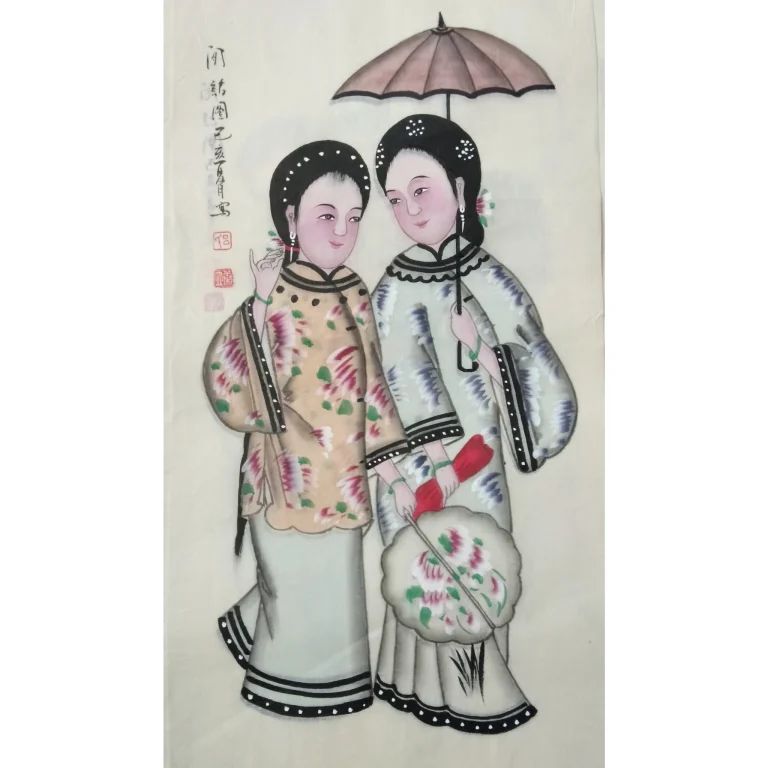
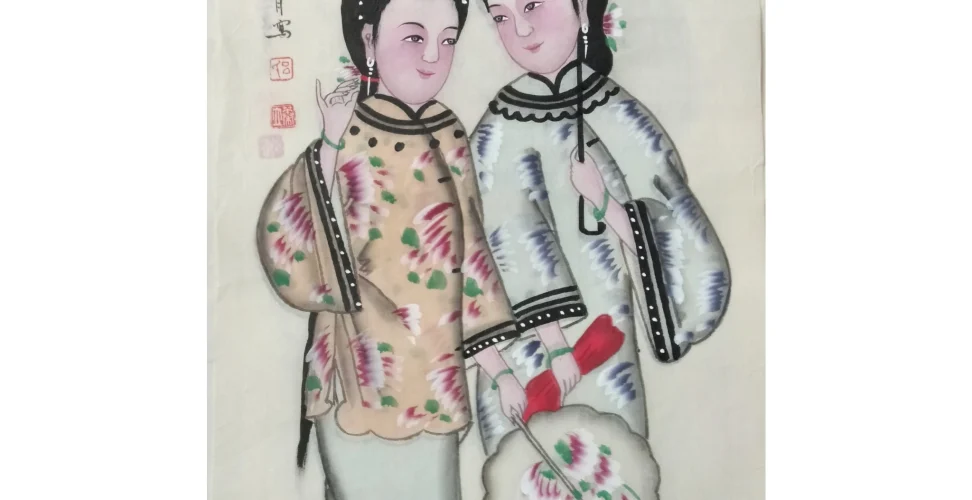
Gaomi Puhui New‑Year Paintings feature a rustic, unrestrained and strongly expressive rural aesthetic. Lines are concise, bold and free‑flowing rather than meticulously refined. Large flat blocks of bright colours create striking visual contrast. Human figures are slightly exaggerated and naive in modelling, carrying unadorned rural charm. Natural variations in pigment depth appear across different works, preventing the lifeless uniformity of mass‑produced items. Closely linked to northern rural folk customs, its subject‑matter covers ancestral hall portraits, wealth deities, the Eight Immortals, door gods, opera narratives, bed‑head decorative paintings and window‑side ornaments. These paintings were widely used for rural seasonal rituals, New‑Year home decoration and domestic display, acting as an intuitive artistic carrier of northern countryside folk culture.
Also listed on the first batch of national‑level intangible cultural heritage, Tianjin Yangliuqing New‑Year Painting took shape in the Wanli reign of the Ming Dynasty and flourished in the Qianlong‑Jiaqing period of the Qing Dynasty. Named after Yangliuqing Town in Xiqing District, Tianjin, it benefited from the Grand Canal water‑borne trade. Prosperous commerce fuelled numerous local painting workshops, giving rise to the well‑known description “every household practised painting and dyeing”. Together with Suzhou Taohuawu New‑Year prints, it earned the reputation “Northern Yangliuqing, Southern Taohuawu”. Located within the Beijing‑Tianjin cultural sphere, this folk art absorbed influences from refined imperial court painting and urban civilian aesthetics. Fine works circulated not only among ordinary households nationwide but also entered imperial palaces. It represents the most commercially mature northern tradition of New‑Year painting.
Yangliuqing New‑Year Paintings adopt a hybrid technique: wood‑block printing combined with hand‑painted finishing. This mixed method marks the mature commercial development of traditional New‑Year painting. The complete workflow contains five major phases: composing the original drawing, carving pear‑wood outline blocks, printing black outlines onto paper, elaborate hand‑painted rendering (painting human faces, known as kailian, constitutes the soul of the craft), and final mounting. Wood‑block printing lays down consistent outlines and base colours to enable relatively large‑scale production; manual brush‑work adds subtle gradations and delicate details to relieve the stiffness of printed lines. Products were divided into finely finished “fine works” and simplified “rough works” to satisfy different market segments, striking a balance between output and artistic quality.
Yangliuqing New‑Year Paintings are characterised by neat, elegant and densely composed imagery that appeals to refined and popular tastes alike. Compositions are full and well‑organised; human figures possess soft, graceful proportions with smooth, delicate outlines. Vivid yet gentle colours are built up through gradual shading, achieving sophisticated texture while retaining festive folk appeal. Its thematic scope caters to urban and civilian life. Iconic subjects include chubby children (the famous Abundant Surplus Every Year), beautiful ladies, door gods, opera stories, daily‑life genre scenes and moral‑teaching historical tales. Suitable for New‑Year blessings, interior decoration as well as artistic collection, these prints reached a broad audience with strong commercial and ornamental value.
| Comparison Item | Gaomi Puhui New‑Year Paintings | Tianjin Yangliuqing New‑Year Paintings |
| Time of Origin | Chenghua reign, Ming Dynasty (earlier origin) | Wanli reign, Ming Dynasty; peak in the Qing Dynasty |
| Core Craft | Charcoal‑dust sketch transfer, fully hand‑painted, no wood‑block printing | Pear‑wood block printing plus hand‑painted finishing, semi‑printed and semi‑painted |
| Artistic Style | Rustic, bold and expressive, strong rural flavour, spontaneous and natural | Neat and delicate, balancing civilian charm with literati elegance, well‑refined |
| Key Feature | Each piece bears distinct hand‑made traces without standardised mass production | Uniform printing base, refined hand finishing, balancing output and texture |
| Main Themes | Ancestral and deity paintings, door gods, rural folk motifs, bed‑head & window‑side paintings | Lucky children, ladies, urban genre scenes, opera and historical narratives |
| Cultural Position | A living fossil of rural hand‑painted folk painting, prioritising practical rural folk customs | Representative of commercially mature wood‑block New‑Year painting, balancing folk usage and artistic appreciation |
Gaomi Puhui and Tianjin Yangliuqing New‑Year Paintings form a contrasting pair: one rustic and purely hand‑painted, the other elegant with mixed printing‑and‑painting techniques. They exemplify two distinct developmental paths for northern Chinese folk New‑Year paintings. Rooted deeply in the countryside, Gaomi Puhui preserves the genuine down‑to‑earth spirit of rural folk craftsmanship. Benefiting from urban commerce, Yangliuqing attained refined craftsmanship and industrial‑scale prosperity. Though differing greatly in technique and aesthetics, they complement each other, enriching the overall heritage of Chinese New‑Year painting culture and passing on festive folk memories and traditional aesthetic values for successive generations.